

Do Hair Growth Vitamins Work? What Deficiencies and Evidence Show

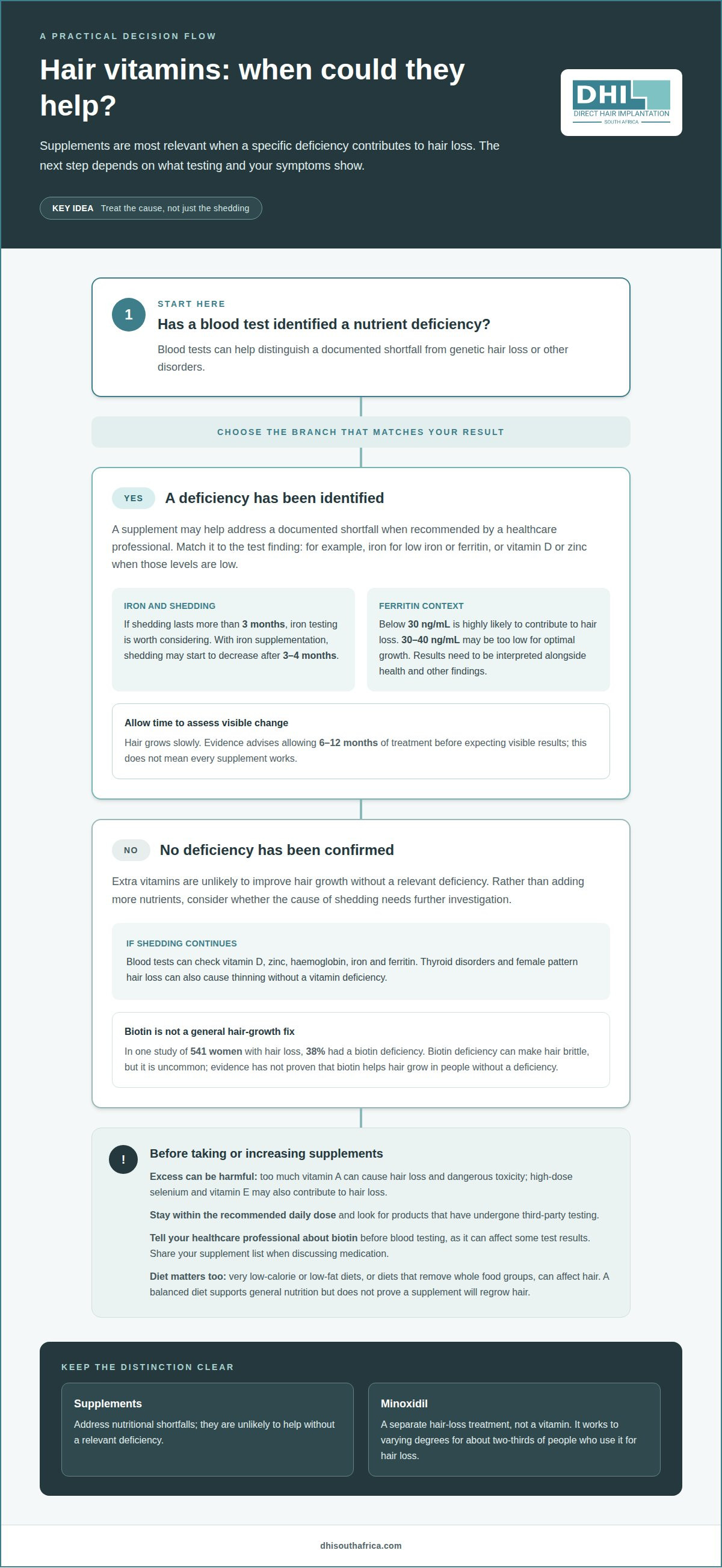
Hair growth vitamins are not a reliable fix unless a deficiency is contributing to hair loss. For people without a specific deficiency, extra supplements have no evidence of improving hair growth; when a nutrient shortage is the cause, correcting it may help. The evidence on whether hair growth vitamins work therefore depends on what’s behind the shedding.
It’s understandable to hope a supplement will offer a simple answer, especially when thinning hair feels worrying and difficult to explain. But taking more vitamins is not always helpful, and some nutrients can cause harm in excess.
This article explains how deficiencies relate to hair loss, what evidence says about nutrients such as iron and biotin, and why supplements may not address other causes, including thyroid disorders or female pattern hair loss. You’ll get a clearer sense of when targeted supplements may be relevant, and why identifying the cause matters before choosing treatment.
Table of Contents
Do Vitamins and Supplements for Hair Growth Actually Work?
Hair supplements may help when a deficiency contributes to hair loss, but they are not a universal way to promote growth. Evidence for popular ingredients, including biotin, is limited, so the cause of thinning matters.
Evidence for biotin and hair supplements
Biotin supplements have not been proven to help hair grow in people without a deficiency. In one study involving 541 women with hair loss, 38% had a biotin deficiency, which means deficiency affected some participants, not everyone experiencing shedding. Biotin deficiency can make hair brittle, but deficiencies in biotin and vitamin C are rare. This distinction helps you judge whether a supplement has a likely benefit for your circumstances.
Evidence for collagen supplements is inconclusive. They may support the health and thickness of existing hair, but evidence that they grow new hair or treat hair loss remains unclear. Clinical studies have not shown that hair vitamins promote growth, prevent hair loss or improve other aspects of hair health in people without a specific deficiency.
Comparing supplements with other treatments
Supplements address nutritional shortfalls; minoxidil is a separate hair-loss treatment, not a vitamin. It works to varying degrees for about two-thirds of people who use it for hair loss, while vitamins are unlikely to help without a relevant deficiency. The two approaches are not interchangeable. Knowing the difference can help you avoid treating a pattern of thinning as though it were automatically a nutrition problem.
Hair grows slowly, so visible changes can take time. The evidence advises allowing 6-12 months of treatment before expecting visible results; with iron supplementation, shedding may start to decrease after 3-4 months. These timelines don’t establish that every supplement works. They show why a short trial can make it difficult to judge whether a treatment is helping.
Results without a nutrient deficiency
Hair vitamins are unlikely to improve growth or appearance if you do not have a nutrient deficiency. Taking biotin or vitamin C without a deficiency is unlikely to change your hair, and adding more nutrients is no substitute for identifying the cause of shedding. Thyroid disorders and female pattern baldness, for example, can cause hair loss without a vitamin deficiency.
Supplements are more relevant when a nutritional problem contributes to hair loss, such as a restrictive diet or low nutrient levels. Very low-calorie or low-fat diets, and diets that eliminate whole food groups, can affect hair. A balanced diet with vegetables, fruit, whole grains and lean protein supports general nutrition, but does not prove a supplement will regrow hair.
Supplement risks and safety checks
Excessive intake can cause problems rather than provide a benefit. Too much vitamin A can cause hair loss and dangerous toxicity; high-dose selenium and vitamin E may also contribute to hair loss. Scalp oil does not establish that a deficiency exists or make excess supplements safe. Avoid exceeding the recommended daily dose, and look for products that have undergone third-party testing.
Biotin can affect some blood-test results, so tell your healthcare professional you take it before testing. Available evidence flags concerns about test results, rather than establishing a specific interaction with medicines; share your supplement list when discussing medication. If shedding continues, consider whether a cause such as thyroid disease or female pattern baldness needs attention, rather than simply adding another vitamin.
How vitamin deficiencies relate to hair loss
A nutrient deficiency can disrupt the hair-growth cycle, particularly when it affects iron or other essential nutrients. Blood tests can help distinguish a documented shortfall from genetic hair loss or other disorders, which supplements will not correct.
Checking for documented deficiencies
Blood tests can identify low levels of vitamin D, zinc, haemoglobin, iron or ferritin. Results help connect shedding with a specific deficiency instead of relying on symptoms alone. If hair shedding lasts more than three months, iron testing is worth considering, since low iron can contribute to hair loss and may lead to anaemia.
Ferritin, a marker of stored iron, provides useful context: levels below 30 ng/mL are highly likely to contribute to hair loss, while 30-40 ng/mL may be too low for optimal growth. Many women experiencing hair loss have levels between 30 and 50 ng/mL. These ranges help explain why testing matters, but a result must be interpreted alongside the person’s health and other findings.
Nutrition-related shedding can follow restrictive eating as well as a specific vitamin or mineral deficiency. Diets extremely low in calories or fat, and those that remove entire food groups, may increase hair loss and leave hair weak. Low calorie and protein intake can also affect the nutrients available to hair follicles. A history of rapid weight loss or limited food variety can provide context for test results.
Supplementing nutritional deficiencies
Supplements can help address a documented deficiency when recommended by a healthcare professional. For instance, a clinician may suggest iron after tests show low iron or ferritin, or recommend vitamin D or zinc when those levels are low. Matching supplements to test findings matters: taking nutrients without evidence of a shortfall may not address the cause of shedding.
Iron deficiency can cause anaemia, which may bring hair loss alongside other health effects. Correcting the shortfall addresses a health issue, not just a cosmetic concern. The appropriate supplement and amount depend on the nutrient involved and the test findings; avoid treating every episode of shedding with the same product.
Ferritin levels of 70 ng/mL or higher are described as optimal for hair growth, while another cited range identifies 40-70 ng/mL as the minimum for healthy hair. These ranges show why a single number needs context. A clinician considers the full bloodwork, symptoms and likely cause before recommending supplementation, rather than treating a hair concern in isolation.
A balanced diet with vegetables, fruit, whole grains and lean protein supports adequate nutrient intake. It cannot, by itself, resolve hair loss caused by genetic factors, thyroid disorders or another health condition. If shedding persists, understanding hair-loss causes can help frame the next conversation around the pattern and possible contributing factors.
Which nutrients aid hair health?
Nutrient advice is most useful when it fits your overall health picture, rather than a single symptom or supplement label. A healthcare professional can help connect changes in your hair with your diet, health history and goals, then decide which concerns need attention first.
Nutrients linked to hair health
Hair is made largely of protein, so very low protein intake can affect its growth. Consider your usual eating pattern, not just one meal or day. For example, note whether your regular meals include a variety of foods, or whether a recent change has made your diet unusually limited. This context can help shape a sensible discussion about nutrition.
Vitamin C supports collagen production, and collagen contributes to hair structure. That biological role is different from evidence that taking extra vitamin C changes hair growth. When reviewing a nutrient claim, distinguish what the nutrient does in the body from what a supplement has been shown to do for hair. This makes product claims easier to assess without assuming more intake means better results.
Vitamin D and hair health
Vitamin D has a role in hair health, and its relevance depends on the person’s circumstances. Rather than treating general advice as a personal prescription, discuss your medical history and any existing supplements with a healthcare professional. This is particularly useful if you take several products, as their combined ingredients may matter when reviewing your routine.
Be clear about your goal: are you concerned about shedding, the appearance of your scalp or changes in hair texture? These are different observations. Describing what has changed can help guide a discussion about whether vitamin D is relevant, rather than making it the assumed explanation from the outset.
Omega-3 supplements and scalp health
Fish oil is not automatically appropriate for everyone, and the available evidence notes a possible stroke-risk concern. Before adding it for scalp health, discuss your current medicines and health conditions with a healthcare professional. This matters especially if you already take other supplements: a new product should be considered as part of your whole routine, not in isolation.
Food choices and supplement choices are not identical. If you’re considering fish oil, explain why you want to take it and what other products you use. This gives the conversation a practical focus, instead of relying on a general claim that one ingredient supports a healthy scalp.
When to consult a healthcare professional
Arrange a medical discussion if a change in your hair is persistent, distressing or accompanied by other health concerns. Beforehand, write down when it began, how it has changed and what you have tried. Include medicines and supplements, as well as recent changes to your usual routine. These details help focus the appointment and reduce reliance on memory.
A clinician can consider whether the pattern suggests a nutritional concern or another health issue, and whether further assessment is appropriate. If a health problem contributes to hair loss, addressing it takes priority over adding nutrients. Bring your questions and supplement packaging, so the advice can relate to your actual products and circumstances.
Biotin and brittle hair
Brittleness describes a change in the hair shaft, while shedding describes hair coming away from the scalp. The difference can be hard to spot in a brush, but the strands offer clues. Short pieces with uneven ends may suggest breakage; longer strands with a visible root end may point to shedding. These observations cannot diagnose the cause, but they give you a clearer starting point for describing what has changed.
Look at where the change appears. If short, snapped strands cluster around areas exposed to frequent brushing, styling or chemical processing, handling may be relevant. If hair seems less dense across the scalp, or the parting looks wider, report that different pattern. Note whether the change affects the ends, lengths or roots, rather than labelling every change as “hair loss”.
A brief hair diary can make the pattern easier to explain. Record when you first noticed breakage, whether it is getting better or worse, and any recent changes to styling or hair products. A dated photograph taken in similar lighting can help you compare the same area over time. Avoid drawing conclusions from one day’s washing or brushing, since those snapshots may not show the longer-term pattern.
Consider what else changed around the same time. For example, a new colouring routine, frequent heat styling or a different brushing habit may coincide with increased breakage. Write down these details before an appointment, along with any changes in overall thickness or scalp coverage. A timeline helps a healthcare professional distinguish changes to the hair shaft from changes in growth or density.
Biotin on a product label does not explain why strands are snapping. The useful question is what your hair is doing and where the change begins. A healthcare professional can consider your observations alongside your wider health and hair history, rather than treating the label as an answer. This is especially helpful when breakage and shedding seem to happen together.
In the meantime, keep your observations specific: “short broken strands around the front” is more useful than “my hair feels unhealthy”. Include when it started and whether it follows a particular styling or washing routine. If the pattern changes, update your notes. Clear descriptions make it easier to discuss the concern and decide what needs closer assessment.
Evidence for vitamins and hair growth
The clearest evidence concerns correcting a confirmed deficiency, not taking a broad supplement for every kind of thinning. With iron supplementation, fine new hairs may start appearing at the scalp after 4-6 months. That possible early sign differs from a noticeable change in overall density, so the outcome being tracked matters.
Hair follicles move through growth and resting phases, so a change in nutrition will not show immediately in every strand. A supplement trial is also difficult to interpret if shedding naturally changes during the same period. Record when loss began, whether it is diffuse or follows a pattern, and any changes in treatment or diet. These details help distinguish a possible response from coincidence.
Research on iron illustrates why evidence needs context. Low iron can disrupt the hair-growth cycle and contribute to hair loss in some people, while supplementation is relevant when iron is low. The same result cannot be assumed for someone whose levels are adequate. Test results, symptoms and the timing of shedding together offer more useful evidence than a product’s promise alone.
Duration matters, too. People who have been losing hair for only two or three years are more likely to notice results from vitamins and supplements than those with longer-term loss. This does not prove supplements will work for either group. It indicates that the history of thinning can shape what improvement might be visible, particularly when a nutritional issue is involved.
Assess the evidence by looking for a defined starting point and a relevant outcome. For example, note whether shedding decreases, fine new growth appears, or hair thickness changes. These are different observations. Reduced shedding does not automatically mean new growth, and new fine hairs do not establish a lasting increase in density.
Hair loss caused by a thyroid disorder or female pattern baldness needs a different explanation from loss linked to nutrient deficiency. Stress or a hormone-related change may also be part of the wider health picture, so a supplement trial alone cannot identify the cause. The pattern, duration and other health changes provide useful context for deciding which evidence applies.
In practical terms, the strongest reason to consider a vitamin is a documented shortfall that could be corrected. Without that link, claims that supplements produce noticeable growth are not supported by clinical evidence. Tracking the specific change you hope to see, alongside the cause being addressed, gives you a clearer basis for judging whether the treatment is relevant.
DHI South Africa: Direct Hair Implantation (DHI)
DHI South Africa offers Direct Hair Implantation (DHI) for people exploring hair restoration beyond nutritional support. Vitamins can address a documented deficiency, but they do not treat every cause of ongoing thinning. If hair loss persists after a deficiency has been addressed, a hair-restoration assessment can help clarify which options may suit your pattern and goals.
Depending on your needs, options include DHI, GFC Treatment, Regenera Activa and PRP Hair Loss Treatment. These are distinct approaches, so the relevant choice depends on your concerns and the treatment being considered. Understanding the differences can help you move beyond supplement claims towards a plan focused on your situation.
Visit dhisouthafrica.com to explore your hair-restoration options.
Choose a clearer next step for your hair
Whether hair growth vitamins work is only one part of understanding a change in your hair. Consider what you want to address: ongoing thinning, a particular area of concern or uncertainty about which approach suits you. A conversation focused on your goals can help you explore options without relying on supplement claims alone.
Before getting in touch, note what has changed and what you hope to improve. Sharing your concerns gives the discussion a useful starting point and keeps the focus on your priorities. If you’re ready to explore hair restoration, contact DHI South Africa for further information.
With a clearer understanding of your options, you can take your next step with greater confidence.
Frequently Asked Questions
Do They Work?
They can be useful when a specific nutritional shortfall contributes to hair changes, but they are not a general-purpose solution. Before buying one, identify what you hope to address: shedding, breakage or thinning in a particular area. These describe different concerns. Keeping that distinction clear helps you discuss the right question with a healthcare professional, rather than judging a supplement by a broad promise on its packaging.
What is Biotin?
Biotin is a B vitamin found in some foods and commonly added to hair supplements. It is an essential nutrient, but a product containing it is not automatically suitable for everyone concerned about their hair. If you’re comparing products, check whether biotin is one ingredient in a multi-nutrient formula or the main ingredient. This can help you avoid overlooking other ingredients you already take.
When Can Supplements Help?
Supplements may be useful when an identified nutritional shortfall is relevant to your hair concern. Bring a list of your current supplements and medicines to a healthcare appointment, including combination products. This makes it easier to spot overlapping ingredients and discuss a targeted approach. If you’ve changed your diet recently, describe what changed and when; that context may help explain whether nutrition deserves attention.
Do hair growth vitamins work according to clinical studies?
Clinical evidence does not support hair vitamins as a general way to promote growth or prevent loss in people without a relevant deficiency. When assessing a claim, look at what outcome was measured: less shedding, stronger strands and increased density are not interchangeable results. A claim about one outcome shouldn’t be treated as proof of another, so read product descriptions with that distinction in mind.
Which vitamins and nutrients can improve hair growth?
No single nutrient is a universal hair-growth answer. Iron, vitamin D and zinc may be considered when a shortfall is identified, while adequate protein intake supports the body’s normal needs. The useful question is which nutrient, if any, is relevant to your circumstances. A varied diet can support overall nutrition, but taking extra amounts without a clear reason does not establish a hair benefit.
What are the risks and side effects of hair growth vitamins?
Risks can arise from taking too much or combining products with overlapping ingredients. Before adding a new formula, compare its label with your existing supplements and record the amount of each nutrient. Share that list with a healthcare professional, especially if you take prescribed medicines or have a planned blood test. Do not assume a product is harmless simply because it is marketed as a vitamin.
Are hair growth supplements regulated or approved in South Africa?
A blanket yes-or-no answer may not apply to every hair supplement sold in South Africa. For a specific product, ask a pharmacist or healthcare professional to explain its stated category and intended use. Read the label carefully, and distinguish how the product is presented from evidence that it can change hair growth. Availability alone is not proof of a hair-growth benefit.


Comments