

Hair Transplant for a High Forehead: Appearance and Options

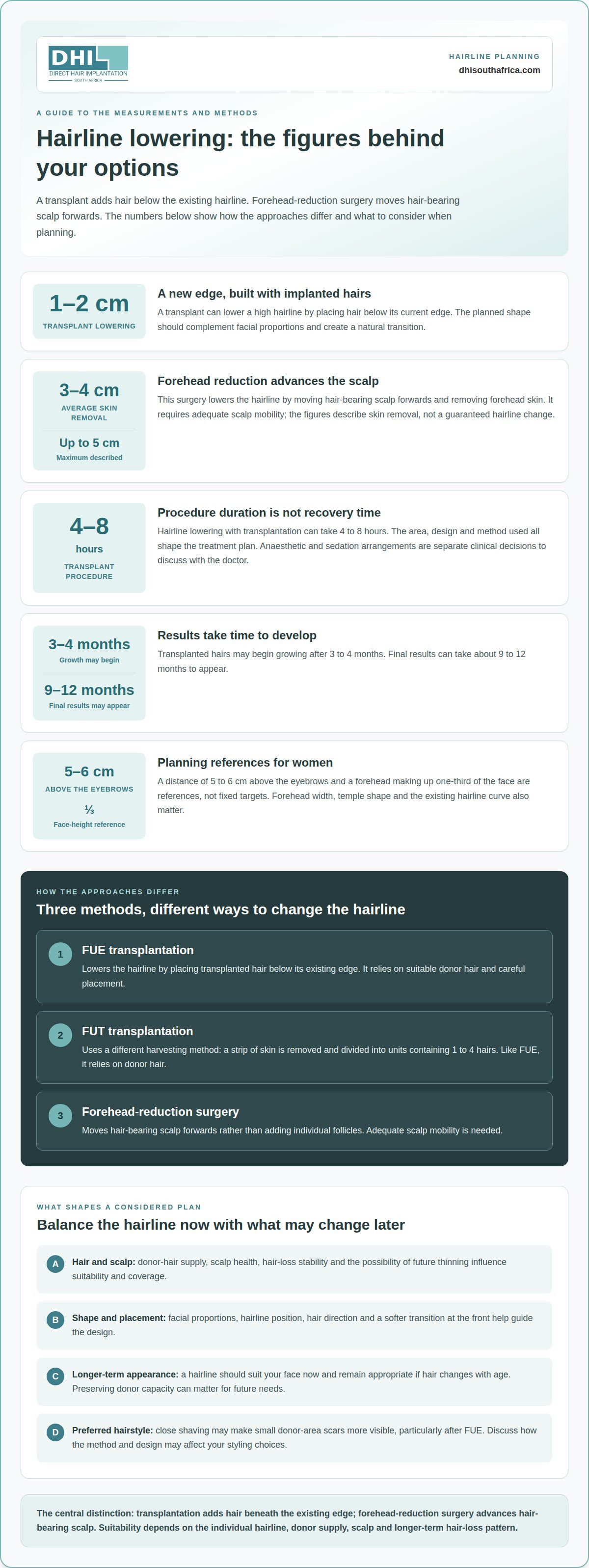
A prominent forehead or changing hairline can affect how you feel about your appearance, and it’s understandable to want to explore your options. A hair transplant for a high forehead can lower the hairline by 1 to 2 cm by placing transplanted hairs below its current edge, creating a different balance between the forehead and the rest of the face.
If your forehead looks prominent, you may be wondering whether a hair transplant for a high forehead could make a noticeable difference, or whether another approach would suit you better. The right option depends on your existing hairline, donor hair, scalp health and the possibility of future hair loss.
This guide explains how hairline lowering with a transplant compares with forehead-reduction surgery, and what influences a natural-looking result. It also covers recovery: transplanted hairs may begin growing after 3 to 4 months, while final results can take about 9 to 12 months to appear. You’ll learn why age and longer-term hair loss matter when planning a hairline, so you can approach the decision with a clearer understanding of the options.
Table of Contents
Can a Forehead Hair Transplant Improve Your Appearance?
Yes, a transplant can lower a high hairline by placing hair below its current edge. The change can be subtle, helping the hairline sit more naturally with your facial proportions.
Eligibility for a naturally high hairline
A naturally high hairline may be suitable for treatment when hair loss is stable and the donor area has enough hair. Suitability also depends on scalp health, the proposed hairline shape and whether future thinning could affect the result.
A hair transplant for a high forehead can lower the hairline by 1 to 2 cm. In South Africa, choose a surgeon who can explain their experience, donor-area assessment, hair-direction plan and risks. A hair transplant in South Africa assessment should also consider facial proportions and longer-term hair loss.
Hairline lowering options
Follicular unit extraction (FUE) lowers the hairline by placing transplanted hair below its existing edge. Follicular unit transplantation (FUT) uses a different harvesting method: according to the NHS, a strip of skin is removed and divided into units containing 1 to 4 hairs each. Both methods rely on donor hair, but they differ in how it is collected.
Forehead reduction surgery lowers the hairline by moving hair-bearing scalp forwards. It can remove up to 5 cm of forehead skin, with an average removal of 3 to 4 cm, and requires adequate scalp mobility. A transplant adds hair; surgery advances the scalp. That distinction helps frame the options.
Female hairline shape and forehead width
For women, the decision involves more than forehead height. Forehead width, temple shape and the curve of the existing hairline all influence whether lowering or softening it would look balanced. The proposed hairline should complement the face rather than create an abrupt edge.
A distance of 5 to 6 cm above the eyebrows is one planning reference for women, while the forehead is described as ideally making up one-third of the face. These measurements are guides, not fixed targets. If the current hairline already suits the face, leaving it unchanged may be more appropriate.
Natural-looking hairline results
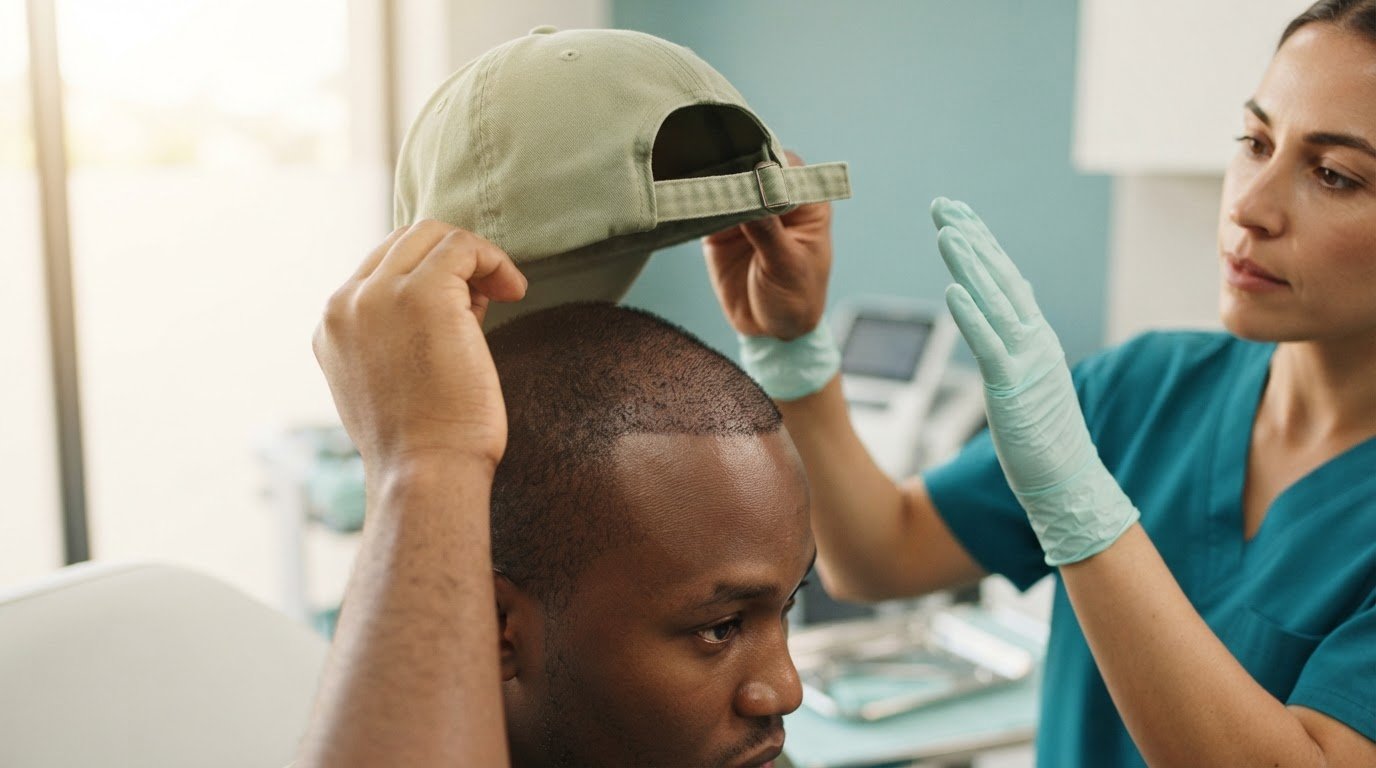
A natural appearance depends on the hairline’s position and shape, as well as the direction of the implanted hairs. Finer hairs can be placed along the front to create a softer transition. Assess the design against your facial features, not simply the amount of forehead visible.
Once healed, transplanted hair can generally be cut and styled. Close shaving may make small donor-area scars more visible, particularly after FUE. Before treatment, discuss how the planned hairline and donor method may affect your preferred hairstyle.
Differences between forehead-lowering surgery and hair transplantation
Both approaches can lower the visible hairline, but they change different tissues. The distinction affects the result, recovery and suitability.
Comparing the surgical approaches
Hair transplantation adds follicles beneath the existing hairline, while forehead reduction surgery moves hair-bearing scalp forwards. A transplant can build a new edge gradually through placement and shape; surgery advances the scalp itself. These are different ways to change the relationship between the forehead and hairline.
The choice partly depends on scalp mobility and available donor hair. Forehead reduction surgery requires enough scalp movement to bring the hair-bearing skin forwards. Transplantation relies on suitable donor follicles and careful placement. A transplant may also refine the hairline after surgery, adding detail where the advanced scalp edge needs a softer shape.
Hairline lowering with transplantation can take 4 to 8 hours. That duration describes the transplant procedure, not the total recovery period. The size of the area, the intended design and the method used all shape the treatment plan. Ask for a clear explanation of what each approach changes before comparing their likely results.
Age and timing considerations
Timing matters because a hairline plan should account for how it may look as you age. Hairline-lowering surgery is commonly sought by people in their 20s or older. A naturally high hairline can remain stable, but pattern hair loss may change the surrounding density.
For younger adults, the key question is whether the hairline and any thinning have settled enough for long-term planning. A low, sharply defined edge may look out of balance if hair behind it later thins. Age alone does not determine that risk; the pattern, stability and family history help inform the assessment.
There is no useful shortcut in choosing a date based only on your birthday. The planned shape must suit your face now and remain appropriate if your hair changes. This matters especially when surgery advances the scalp, because the change is not made by adding individual follicles in stages.
Procedure duration and sedation
A transplant’s 4 to 8-hour duration can make the day feel substantial, but it does not establish which sedation or anaesthetic approach is used. Those are separate clinical decisions. The planned method and the operation itself inform the discussion.
Before treatment, the doctor should explain the proposed anaesthetic and sedation plan, what you may experience during the procedure and how you will be monitored. Forehead reduction surgery and transplantation involve different techniques, so their plans should not be assumed to be the same.
Use the consultation to compare practical details alongside appearance goals: what tissue changes, how the hairline will be shaped, and what the procedure involves. For readers considering treatment locally, hair transplantation in South Africa is best discussed in the context of an individual hairline assessment.
Hair transplant recovery and healing
During a hairline transplant, follicles are taken from a donor area and implanted along the planned edge. A forehead transplant may take 4 to 8 hours; early healing takes days, whilst visible growth takes months.
Healing and expected results
Small pinpoint marks from a hair transplant are described as healing within a few days. Scabs around implanted follicles usually fall away 7 to 10 days after treatment. These early changes are part of the healing timeline, not a sign that the final appearance has emerged.
New hair may start growing after 3 to 4 months of recovery. Transplanted hairs usually shed before regrowing, so a temporary change in appearance can occur during the first months. Final results may take about 9 to 12 months to appear, and density depends on follicle growth.
After forehead reduction surgery, the incision near the hairline takes about 2 to 3 weeks to heal properly. Final results commonly develop over 12 to 18 months. The transplant and surgical timelines differ because one heals around implanted follicles, whilst the other also involves an incision.
Returning to work after treatment
Some patients can return to work and social activities 24 hours after a hair transplant, whilst taking it easy for a few days. This timing helps with planning, but visible scabs may still affect how comfortable you feel in public or at work.
Activity needs a separate plan. The guidance recommends avoiding sports for around three weeks after a hair transplant. It also advises avoiding nicotine for 2 to 3 weeks before and after the operation, and waiting at least 4 weeks before using hair dye or tint.
These milestones are not interchangeable: returning to desk work does not mean your scalp is ready for strenuous exercise. Follow the aftercare instructions for your procedure, especially if your work involves physical exertion or protective headwear.
With a receding hairline, the transplanted edge may look different before new growth appears. Plan work commitments around both early healing and the longer wait for visible change. A consultation should cover the procedure, aftercare and expected stages of recovery, so you can make practical arrangements beforehand.
Planning for future hair loss and ageing
A hairline plan should suit your face now and remain balanced as you age. The pattern and stability of hair loss help determine whether lowering the hairline is sensible.
Suitability and hair-loss stability
Suitability partly depends on whether existing thinning is absent, stable or appropriately managed. If hair loss is progressing, adding hair at the front may leave a difference in density behind it later.
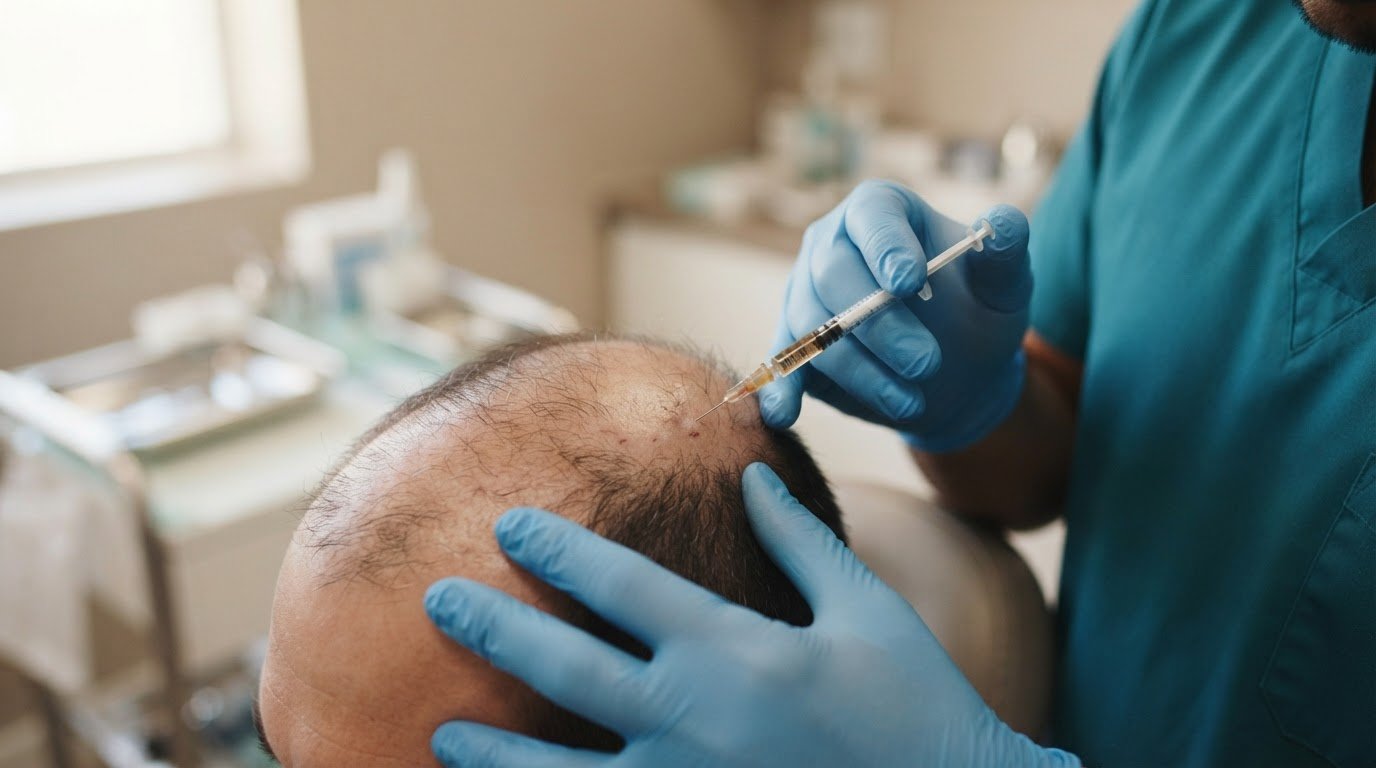
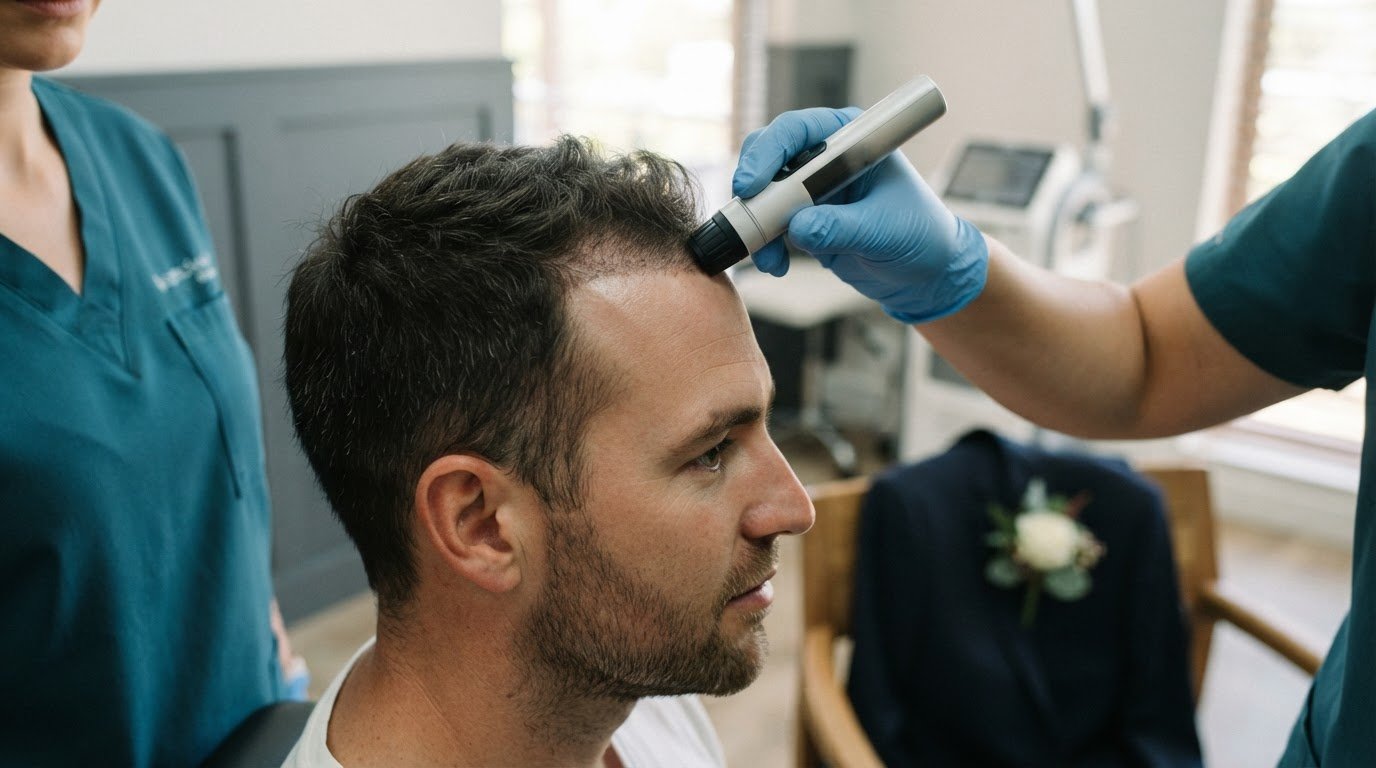
A specialist assesses the hairline pattern, donor supply and scalp health together. They also consider whether inflammation, scarring or another condition needs investigation before treatment. These checks help distinguish a naturally high hairline from one changing through alopecia, the medical term for hair loss.
Age provides context, not a complete answer. Hereditary hair loss can affect women from age 20, so a stable-looking hairline at one stage may not tell the whole story. A specialist considers the distribution and progression of thinning, rather than treating the forehead in isolation.
Hormonal history may also form part of a medical assessment when hair loss is being evaluated. The question is whether a change in density has an identifiable pattern or needs further investigation. This matters before a lasting hairline change: treatment should address the overall picture, not just the visible forehead.
Planning for long-term hair loss
Long-term planning means choosing a hairline that still looks proportionate if surrounding hair becomes thinner. One surgeon advises waiting until at least age 25 before transplantation, because future loss may leave insufficient donor hair. Another advises waiting until the early to mid 20s when a naturally high hairline may still mature.
These age suggestions reflect different considerations, not a universal cut-off. A 19-year-old, for example, may need time for the hair-loss pattern to become clearer. The assessment weighs age alongside stability, family pattern and the amount of donor hair available for future needs.
Think beyond the immediate reduction. A hairline that looks attractive at 25 may look unusual at 45 if hair behind it recedes. A conservative design can preserve flexibility, particularly when the longer-term pattern remains uncertain.
If you prefer a lower hairline, discuss how its shape will relate to possible future thinning. A specialist can consider whether to proceed, wait or plan a more conservative change. This helps align the proposed edge with your facial proportions and the likely course of hair loss.
Donor-area capacity and future reserve
The donor area is the source of follicles used to rebuild a hairline. Its capacity affects how much coverage can be planned and how much hair remains available for future needs.
There is no fixed number of hairs needed for every forehead. The amount depends on the recipient area, planned density, donor hair quality and the reserve needed if hair loss develops elsewhere. A smaller area may need fewer hairs, while a broader change can place greater demands on the available supply.
During planning, the specialist assesses the donor and recipient areas together. The donor area is usually at the back or sides of the scalp; the recipient area is where follicles will be placed. The assessment considers the distribution and quality of available hair, as well as the size and shape of the proposed hairline.
Density matters, but using the largest possible number of hairs is not automatically the best plan. The aim is to place available follicles where they contribute most to a balanced appearance. For example, a defined front edge may take priority over spreading limited donor hair too thinly across a larger area.
One illustration shows how the recipient area can grow with even a modest change: a strip 1 centimetre deep and 15 centimetres wide adds about 15 square centimetres, before curved corners are considered. That example explains why a small lowering can still require careful allocation. The final area depends on the proposed hairline shape.
If donor supply is limited, the plan may need to be more conservative. A specialist can consider a smaller recipient area, a softer hairline design or whether treatment should wait. The decision weighs desired coverage against available follicles rather than promising a particular density.
Future reserve matters too. If hair loss progresses, further treatment may be considered later, but donor supply is finite. Preserving capacity means avoiding an unnecessarily low hairline or using too much donor hair in one area. A sound plan considers both the appearance you want now and the pattern that could develop over time.
Hair quality influences the visual coverage each placement can provide. Hair thickness, contrast with the scalp and natural direction all affect how density appears. These factors help the specialist decide where each hair can contribute most, rather than relying on a single target number.
DHI South Africa: Hair Systems & Hairpieces
DHI South Africa can help you explore options if a high forehead or changing hairline affects how you feel about your appearance. Hair Systems & Hairpieces offer a non-surgical alternative to transplantation. If you are considering a transplant, Direct Hair Implantation (DHI) can be discussed in relation to your hairline, donor capacity and longer-term hair-loss pattern.
GFC Treatment and Regenera Activa are also available options. The right route depends on your concerns and clinical assessment; these treatments are not interchangeable. A discussion can help clarify whether you are considering hairline lowering, another approach or simply want to understand your options before deciding.
Contact DHI South Africa to discuss your options.
Choose a hairline plan that feels right for you
A hair transplant for a high forehead is a personal decision, not simply a matter of lowering the hairline. First, clarify what you want to change, how much donor hair is available and whether the proposed shape will suit you over time. This conversation can also distinguish a hairline concern from wider hair-loss needs.
DHI South Africa offers Direct Hair Implantation (DHI), GFC Treatment and Regenera Activa. These are distinct options, and a discussion can help you understand which may relate to your goals. Talk through your preferred hairline, concerns about future thinning and the appearance you hope to achieve, then consider the options with a clearer sense of direction.
Taking time to make an informed choice is part of planning a considered, personal result. You can move forward at your own pace.
Frequently Asked Questions
How Much Can You Lower Your Hairline?
The planned change depends on your facial proportions, hairline shape and available donor hair. A specialist maps the proposed edge against your forehead and temples rather than choosing a lowering distance in isolation. Discuss whether a subtle change at the centre or broader reshaping better matches your preference. The design should also allow for future changes in the surrounding hair.
What Results and Recovery Can You Expect?
Expect the appearance to change gradually rather than show the final hairline immediately. Transplanted hairs can shed before growing again, so an early photograph may not reflect the eventual result. Follow the aftercare plan for your procedure and avoid judging density during the initial healing phase. Progress photographs taken in similar lighting and from similar angles can help you track changes consistently.
When will I be able to socialise and work again?
Your return to work depends on visible signs of early healing and the demands of your role. A desk-based job may be easier to resume than work involving physical exertion, tight headwear or regular public-facing duties. Plan around your comfort as well as your schedule. If you have an important event, allow time for your scalp’s appearance to settle beforehand.
Are There Any Risks?
Potential concerns include infection, poor healing, an unnatural hairline design or changes caused by continued hair loss. Scalp inflammation, scarring or another underlying condition should be assessed before treatment. Discuss the risks associated with the proposed method, the aftercare plan and how future thinning could affect the result. Clear answers help you weigh the expected change against practical considerations.
Do scars remain after a hair transplant?
Scarring can depend on the harvesting method and how you wear your hair. Follicular unit extraction (FUE) removes follicles individually and can leave small marks in the donor area. If you prefer very short hairstyles, discuss how the donor area may look when closely cropped. Your planned harvesting area and usual haircut are useful details to raise before deciding.
Does Forehead Width Affect the Number of Hairs Needed?
Forehead width affects the size and shape of the area being treated, which influences how many hairs may be needed. The plan also considers desired density, temple contours and donor supply. A wider forehead does not automatically mean the hairline should be lowered across its full width. A specialist can map the proposed outline and allocate hair where it contributes most to facial balance.
Does existing hair need to be shaved prior to the hair transplant?
Direct Hair Implantation (DHI) does not require full head shaving. With follicular unit extraction (FUE), the back of the head is usually shaved to one millimetre. Preparation therefore depends on the technique and donor area. Tell the doctor if keeping your existing hair long matters to you, so the plan can account for your hairstyle and the areas being treated.
Can a hair transplant lower a high forehead or correct a high hairline?
Yes. Transplanted hair can be placed below the existing hairline to create a lower edge. The new outline should suit your facial features and account for possible changes in the surrounding hair. A further procedure may be considered later, depending on the first procedure’s results. This possibility makes a measured initial design important when discussing your preferred hairline.
Comments