

Minoxidil Stopped Working: What Happens If You Stop

Stopping minoxidil doesn’t usually mean every hair will fall out overnight. If you’re wondering, “Minoxidil has stopped working, so what now?”, renewed thinning may reflect ongoing hair loss rather than the treatment suddenly becoming ineffective. Shedding commonly resumes three to six months after you stop.
It’s understandable to feel discouraged when the progress you hoped for seems to stall, or shedding increases despite consistent use. Minoxidil can support hair growth while you use it, but it doesn’t address every cause of hair loss, and results can change over time.
This article explains why minoxidil may seem less effective, what stopping can mean for your hair, and why a change in shedding deserves a closer look. You’ll also learn about treatment alternatives and next steps to discuss, helping you make a considered decision rather than stopping or changing your routine in a rush.
Table of Contents
Could my hair loss be something other than androgenetic alopecia?
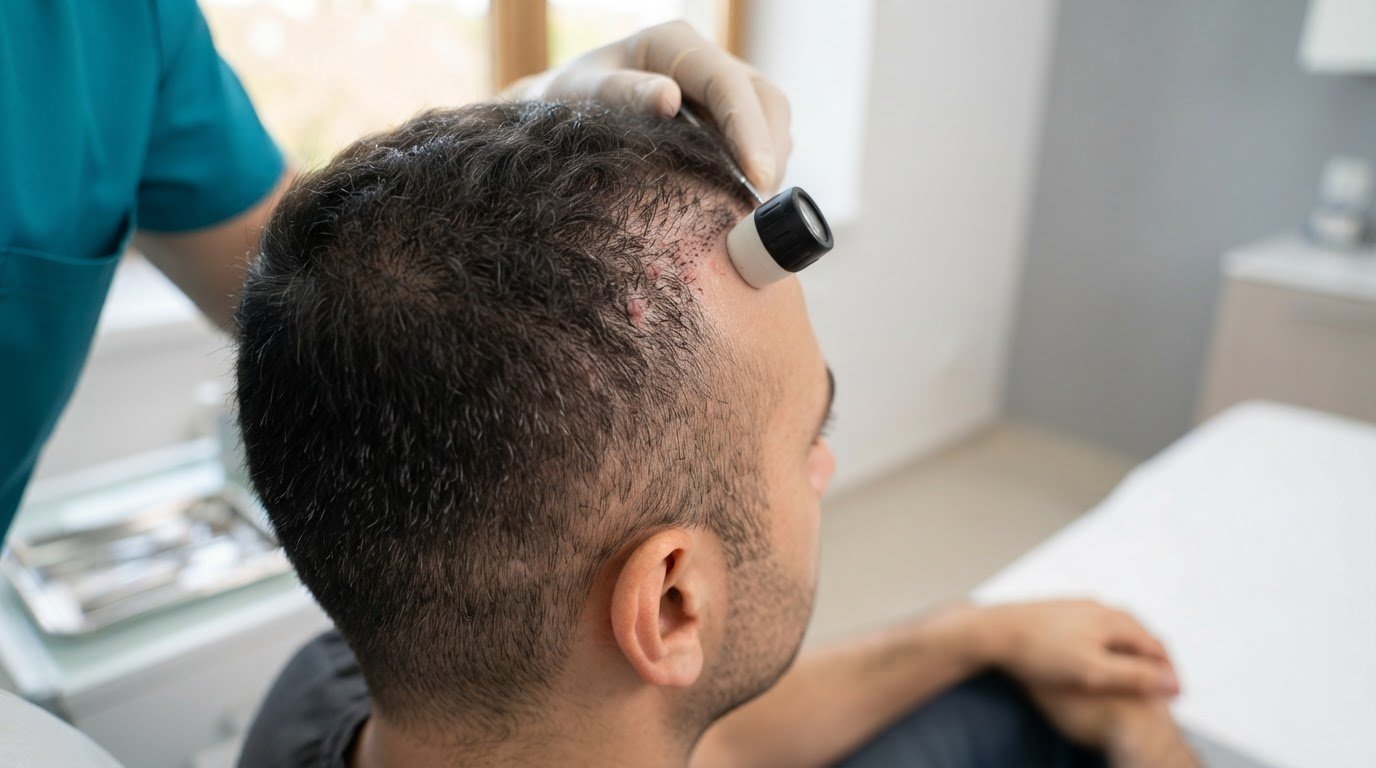
Yes. Renewed hair loss does not automatically mean androgenetic alopecia has worsened or minoxidil has stopped working. A hair-loss assessment can begin with your history and a close scalp examination using magnification. Blood work or a biopsy may also help investigate a changed pattern of shedding. The timing matters: minoxidil-related shedding usually occurs during the first 2 to 8 weeks of use, while a later change deserves a broader review.
Progression can also be mistaken for a treatment plateau. Minoxidil may support hair growth without stopping androgenetic hair loss from advancing. Hair loss can continue despite consistent daily use, and visible improvement may take 6 to 12 months to assess. Peak visible improvement is usually reported in months 9 to 18. Compare photographs taken under similar conditions, then review the pattern with a hair-loss specialist rather than judging one day’s shedding.
Stopping and restarting can further complicate the picture. Shedding after stopping minoxidil typically begins 2 to 8 weeks after treatment ends. If treatment is restarted, an increase in shedding may occur; it usually clears within 3 to 6 months. Those timelines are useful context, not a diagnosis. Note when you stopped, restarted or noticed a change, and share that sequence during an assessment.
For men with androgenetic hair loss, prescription finasteride is one treatment option. It blocks DHT, a hormone involved in pattern hair loss, and can help reduce further loss. It is not the same as minoxidil, so the treatments address different aspects of the problem. A discussion about prescription treatment should include your diagnosis, health history and potential side effects. Don’t change or combine treatments based only on a sudden increase in shedding.
Some patients also ask about platelet-rich plasma (PRP) and extracellular matrix treatments. One reported claim is that a combined hair-regeneration treatment may last 3 to 5 years or longer, but that should not be treated as a standard duration for every protocol or patient. The key assessment step is identifying the cause and pattern of hair loss before choosing a treatment. That helps distinguish ongoing androgenetic progression from another reason for shedding, and makes the next treatment discussion more relevant.
Does minoxidil work for all types of hair loss?
No. Minoxidil doesn’t work for everyone, and the cause of hair loss matters. It can delay the shedding phase and extend the growth phase, but it doesn’t address every process affecting hair follicles. For example, minoxidil doesn’t affect DHT, a hormone involved in androgenetic alopecia. This distinction helps explain why hair growth may continue to change, even with regular treatment.
A specialist may assess the hair-loss pattern before judging a response. Androgenetic alopecia often follows a recognisable pattern, whilst other causes can produce different changes. Topical minoxidil is generally assessed after 6 to 12 months of consistent use, rather than after a short period. Continued thinning can reflect the underlying condition progressing, not necessarily the medicine losing its effect. The diagnosis and treatment history both matter.
Follicular sulfotransferase testing may help estimate whether minoxidil is likely to work. This enzyme helps activate topical minoxidil within hair follicles. Testing involves examining plucked follicles for enzyme activity. Sulfotransferase activity has been reported to predict response with up to 90% accuracy. An analysis of multiple studies also found that testing ruled out 95.9% of minoxidil non-responders. These findings describe prediction, not a guarantee of individual results.
A small study explored whether tretinoin could change predicted response. Twenty patients with androgenetic alopecia applied 0.1% topical tretinoin to a marked scalp area. In a related small study, 43% of participants initially predicted to be non-responders crossed the predicted responder threshold after tretinoin treatment. This evidence does not mean tretinoin is suitable for everyone. A hair-loss specialist can interpret test results alongside your scalp pattern and treatment history.
Stopping minoxidil can also change what you see. Hair commonly returns to its pre-treatment state within around 6 months after discontinuation. In one study, four in ten men had hair counts below their baseline after stopping topical minoxidil. The outcome depends partly on the underlying hair-loss pattern and whether treatment-supported growth was maintaining hairs that remain vulnerable. If you’re considering stopping, discuss the timing and likely implications with a hair-loss specialist.
Long-term evidence on topical minoxidil effectiveness
Topical minoxidil can support hair growth over time, but it doesn’t prevent every cause of hair thinning. If you’re thinking, “Minoxidil has stopped working. Now what?”, first distinguish a plateau from ongoing hair loss. In South Africa, topical liquid and foam are available over the counter; oral minoxidil is taken once daily.
Effectiveness and treatment limitations
Long-term evidence suggests topical minoxidil can maintain some gains, although it isn’t a cure for androgenetic alopecia. A five-year study of men using 5% topical minoxidil found that first-year hair-count gains were largely maintained at five years. That finding describes a study group, not a guaranteed result for every patient.
Its benefit also has limits. A review reported moderate regrowth with 2% minoxidil alone in 13 to 20% of women. Off-label 5% topical minoxidil raised the proportion who responded to as much as 40%. A higher concentration doesn’t necessarily mean greater effectiveness, so changing strength without advice may not improve the outcome.
Costs vary by product and formulation, so check the current Rand price when purchasing. Topical minoxidil is available over the counter as a liquid or foam. Oral minoxidil is a different formulation. Discuss its use with a clinician rather than treating it as an over-the-counter topical option.
Changes in minoxidil effectiveness
Minoxidil doesn’t necessarily lose its effectiveness over time. Hair thinning may still progress because the medicine doesn’t address DHT, a hormone involved in male pattern hair loss. A change in appearance can also reflect the underlying condition, inconsistent use or a response that has reached a plateau. Comparing photographs taken under similar conditions can help you track changes more reliably.
Topical minoxidil needs daily use to sustain its effect. If irritation or another side effect leads you to stop, the effects may take a few days to a few months to wear off. Scalp redness and irritation are recognised issues with topical use. A clinician can review your reaction and treatment history before you change your routine.
If minoxidil seems to have stopped working, what should you do? For some men with androgenetic hair loss, finasteride may be discussed alongside minoxidil because it acts on DHT. If medication doesn’t hold the line after 18 to 24 months of consistent use, a hair-restoration consultation may help assess options, including whether a transplant is appropriate. Progression alone doesn’t prove minoxidil has stopped working.
What happens if I stop Minoxidil and start again?
Stopping can lead to renewed shedding, and restarting won’t restore hair immediately. Minoxidil can also cause an initial shedding phase after treatment begins. A change in shedding alone doesn’t prove the treatment has lost its effect; the timing and pattern of thinning provide useful context.
Shedding after stopping minoxidil
Hair shedding after stopping usually begins 2-8 weeks after treatment ends. During the first 1-2 weeks, there may be no significant visible change, though scalp dryness can occur. That gap can make it difficult to connect a later increase in shedding with stopping.
Keep track of when you stopped and what changed afterwards. This timeline gives a GP or dermatologist a clearer picture than a general estimate of when thinning began. The amount of visible change also depends on the hair loss you had before treatment.
Sudden shedding during treatment
An initial shedding phase can occur after starting minoxidil, and it doesn’t necessarily mean the treatment is failing. The key distinction is whether shedding began soon after treatment started or appeared after a period of stable use.
If the change is sudden or continues, record when it began and whether it affects the same areas as your usual thinning. Consistent photographs can help show whether the pattern has changed. A hair-loss specialist can review the pattern alongside your treatment history.
Causes of renewed shedding
Renewed shedding may follow stopping treatment, restarting it or a change in the underlying hair-loss pattern. Minoxidil’s effect lasts only while it is used, so restarting doesn’t immediately replace the support lost during a break.
Write down the dates of any pause, restart or change in application, then note where thinning appears. This can help distinguish a treatment-related change from a different pattern. If shedding feels unlike your usual experience, discuss it with a GP or dermatologist.
Tapering and shedding
There is no scientific evidence that gradually reducing minoxidil prevents shedding after stopping. A slower reduction therefore cannot be relied on to preserve treatment-supported hair growth.
Before stopping, discuss the decision with a GP or dermatologist, especially if you also use prescription treatments. They can consider your diagnosis and current plan. Hair surgery is a separate decision, not an automatic next step after discontinuation.
Microneedling and oral minoxidil as possible alternatives
When topical minoxidil brings little improvement, alternatives depend on the cause of hair loss and your health history. Microneedling and oral minoxidil differ in how they are used, so neither is a straightforward dose swap.
Alternatives to minoxidil
Alternatives use a different approach to address hair loss or support a revised treatment plan. For some men with androgenetic hair loss, finasteride may be discussed because it blocks DHT. Women need an assessment suited to their pattern and likely cause, rather than assuming the same prescription options apply.
Microneedling is another option people may ask about. It involves the scalp, unlike an oral formulation, and should be considered in light of your diagnosis and any existing scalp irritation. A hair transplant is a separate surgical option, not a substitute for medicine. An assessment should consider your thinning pattern and whether hair loss is stable enough for surgery.
Risks of dose increases and combined treatments
Increasing the dose or combining treatments changes your exposure to one or more medicines, which can affect side effects as well as potential benefits. A higher percentage of minoxidil doesn’t necessarily mean greater effectiveness. Discuss changes with a prescriber instead of increasing the dose or adding microneedling yourself.
For oral minoxidil used for hair loss, low-dose regimens described in the research range from 0.625 mg to 2.5 mg daily. Oral minoxidil can cause increased body or facial hair in some people. The higher doses of 10 mg or more were originally approved as a blood-pressure drug, not as a hair-loss dose.
In South Africa, oral minoxidil for hair loss should be managed by a prescriber. Over-the-counter liquid and foam are topical formulations, not oral tablets. A prescriber can weigh the reason for changing treatment, your other medicines and your health history before recommending an option.
Chest pain, dizziness and swelling are serious side effects for which a doctor may recommend stopping minoxidil. If these occur, seek medical advice promptly rather than increasing the dose or combining treatments. For women, the choice also depends on the cause of hair loss and whether a treatment is appropriate to their circumstances. Switching formulations or adding a procedure does not assure regrowth.
DHI South Africa
DHI South Africa can help you consider what comes after minoxidil when progress appears to stall or shedding returns. Start by understanding your hair-loss pattern, treatment history and goals. That context matters: a medication change, a regenerative treatment and a surgical procedure are different options, each addressing a different need.
Direct Hair Implantation (DHI) is a hair-transplant option to discuss when thinning has created areas where you want to restore coverage. Suitability depends on factors such as the distribution of hair loss and available donor hair. It isn’t a way to diagnose why shedding has increased, nor does it automatically stop the underlying process. A careful assessment helps establish whether surgery fits your circumstances and expectations.
For people exploring non-surgical approaches, GFC Treatment and Regenera Activa may form part of a hair-restoration discussion. They are distinct treatment options, not simply alternative names for minoxidil. The key question is whether either fits your hair-loss pattern, previous treatments and intended outcome. Comparing these details can help clarify whether a medical treatment or another approach deserves consideration.
PRP Hair Loss Treatment is another option to discuss when reassessing a hair-loss plan. Rather than assuming it replaces minoxidil, consider how it might fit with your diagnosis and any current treatment. A consultation can clarify what each option is intended to address, how it relates to your priorities and what questions remain before you decide.
If minoxidil seems less effective, bring the timeline into the discussion: when you began treatment, whether you used it consistently, when shedding changed and whether you stopped or restarted. These details help distinguish a perceived plateau from ongoing pattern hair loss or a change that needs further assessment. They also support a more relevant discussion about DHI, GFC Treatment, Regenera Activa or PRP, without assuming one approach suits every situation.
You can explore hair-restoration treatment options as you consider your next step. DHI South Africa offers several approaches, from medical treatments to implantation, so the discussion can focus on what aligns with your needs rather than a single default solution.
If you’d like to discuss your options, contact DHI South Africa when it feels right for you.
Frequently Asked Questions
If I stop minoxidil, will all my hair fall out?
No. Stopping doesn’t mean every hair will fall out. The change depends on how much of your current coverage was supported by treatment and how your underlying hair loss behaves. For a useful comparison, look at photographs from before treatment alongside recent images taken in similar lighting and from the same angles. This can show whether the change is gradual or concentrated in particular areas.
What does “minoxidil not working” actually mean?
It can mean different things: no visible regrowth, continued thinning or no longer maintaining the coverage you previously had. These aren’t identical outcomes. Before deciding the treatment has failed, define what you hoped it would do and what has changed. For example, a stable hairline with no new density differs from continued loss across the crown.
Is oral minoxidil better than topical?
There isn’t one formulation that is best for everyone. The choice can depend on your health history, other medicines, preferences and ability to follow the treatment routine. Discuss oral minoxidil with a clinician rather than substituting it for a topical product independently. Bring a list of your current medicines and any previous reactions, so the options can be considered in the context of your health.
Are there any real reasons minoxidil’s effect might diminish over time?
Hair may look thinner over time without the medicine itself becoming less active. To investigate, compare consistent photographs, review any changes in your application habits and consider whether the original diagnosis still fits. If images show a change in distribution, such as new thinning beyond previously affected areas, that detail can help guide a more focused reassessment.
Why might minoxidil stop working for hair loss?
Sometimes the treatment hasn’t produced the regrowth you hoped for; in other cases, the underlying condition or diagnosis needs another look. A clinician may consider the location and pattern of thinning, scalp appearance, treatment history and other relevant health factors. Keep a concise record of when you began treatment and what changed. This gives the assessment useful context beyond the impression that the product no longer works.
How long does minoxidil take to work, and when do results plateau?
Visible change can take sustained use, and progress may level off rather than continue indefinitely. A plateau describes a period with little further visible improvement; by itself, it doesn’t establish treatment failure. Use dated photographs in consistent lighting to judge change across the scalp. When reviewing progress, note separately whether your aim is new growth, improved coverage or maintenance.
What should you check if minoxidil seems ineffective, including dose, application and consistency?
Start with the product label and your prescribed or recommended directions. Check that the formulation and application routine match those instructions, then keep a brief record of missed applications and any changes. Don’t compensate for missed use by applying extra product or changing strength. If you’re unsure, bring the product packaging and your routine notes to a clinician for a practical review.
Should you stop minoxidil if it is not working, and what happens after stopping?
Don’t make the decision based only on frustration with a short-term change. Consider your treatment goal, how you’ve used the product and whether you’ve had problems with it. A GP or dermatologist can help you weigh continuing, changing or stopping, and discuss a plan to monitor your hair. If you’re considering another treatment, clarify its purpose before making a change.

Comments