

Shock loss after a hair transplant: causes and scalp care

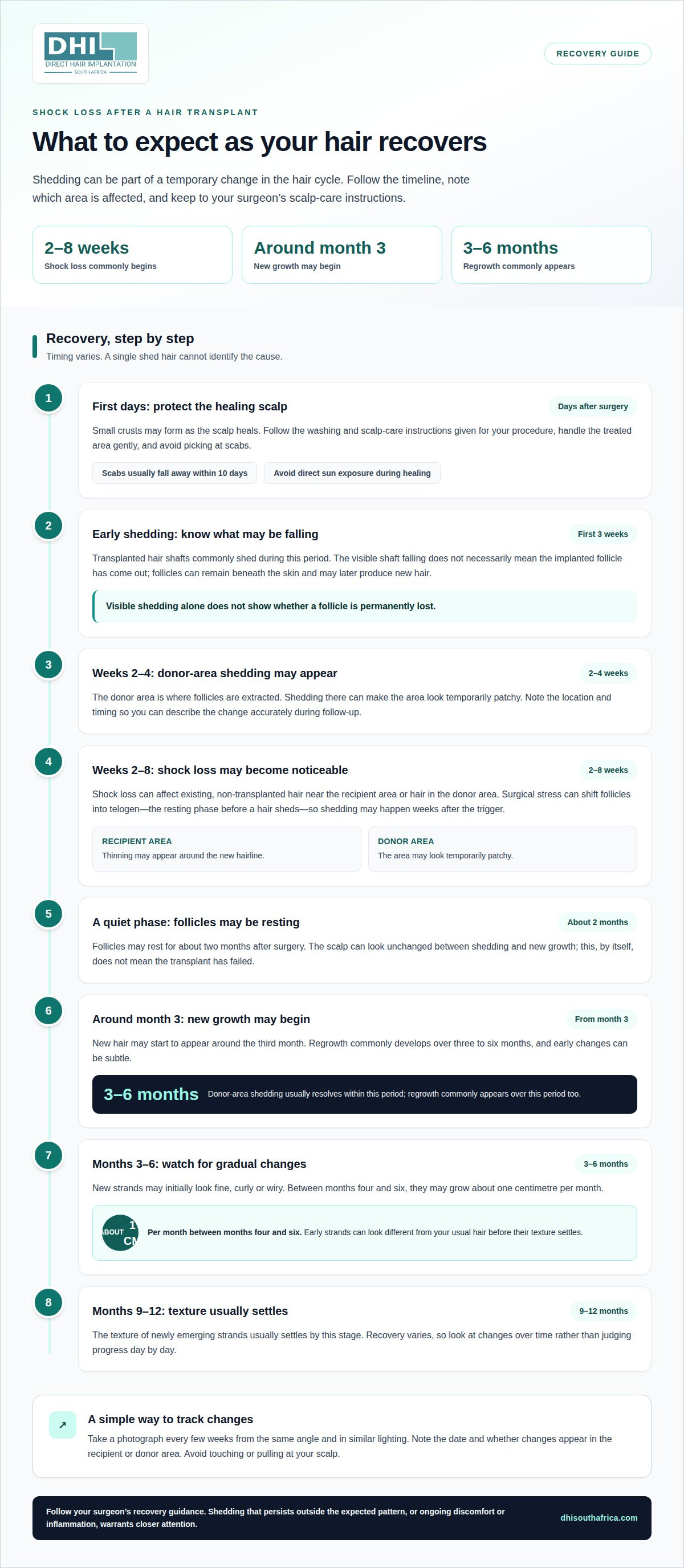
Shedding after a hair transplant can feel like a setback, but it often reflects a temporary change in the hair cycle. If you’re wondering what to do about shock loss after a hair transplant, note when the shedding began and which area is affected. Shock loss commonly starts between the second and eighth weeks after surgery, while new growth may begin around the third month.
It’s understandable to feel concerned when your hair looks thinner during recovery, especially when you hoped to see progress. Density changes can be difficult to interpret alone, and a clear explanation can help you understand what may be part of healing and what needs medical attention. This guide explains why shock loss happens, how to care for your scalp and which factors may increase the risk, including considerations for women after a transplant. You’ll also learn how regrowth may develop and when to contact your surgeon about ongoing shedding, discomfort or inflammation. The aim is to help you understand recovery and decide what warrants closer attention.
Table of Contents
What causes shock loss after a hair transplant?
Shedding can affect both the recipient area and the donor area after surgery. If you’re wondering what to do about shock loss after a hair transplant, first note where it appears and when it begins.
Shedding in recipient and donor areas
The recipient area is where follicles are implanted, while the donor area is where they are extracted. In either area, shedding may follow the physical stress of surgery, although it can look different: the recipient area may appear thinner around the new hairline, while the donor area may look temporarily patchy.
Donor-area shedding often appears within two to four weeks and usually resolves within three to six months. Knowing which area is shedding helps you describe the change accurately during follow-up. The location of the procedure and the areas treated are part of planning a hair transplant.
Causes of post-transplant shedding
Surgical stress can disrupt the normal hair cycle, prompting affected follicles to enter telogen, the resting phase before a hair sheds. The hair may fall several weeks after the trigger rather than immediately after surgery. This shift can affect transplanted follicles or existing hair near the treated area.
Healing and changes around the follicles can contribute to temporary shedding in the recipient or donor area. Hairs may fall even though the follicles remain beneath the skin. This distinction matters: visible shedding alone does not show whether a follicle is permanently lost.
Transplanted-hair-shaft shedding and native-hair shock loss
Transplanted-hair-shaft shedding usually means that the visible hair shaft attached to a transplanted follicle falls, not that the implanted follicle has come out. These shafts commonly shed during the first three weeks, while the follicles remain under the skin and may later produce new hair.
Native-hair shock loss is different: it affects existing, non-transplanted hair around the recipient area or hair in the donor area. This explains why thinning can appear beyond the implanted hairs. If you notice shedding, the affected area and timing can help clarify what may be happening.
Shedding and regrowth stages
Shedding commonly begins between the second and eighth weeks after surgery. Transplanted hair shafts may fall within the first three weeks, while shock loss affecting native hair can become noticeable later in early recovery. Timing varies, so a single shed hair cannot identify the cause.
New growth may begin around the third month, with regrowth commonly appearing over three to six months. If you’re considering what to do about shock loss after a hair transplant, record the affected area and when shedding began. A scalp that looks unchanged between shedding and new growth does not, by itself, mean the transplant has failed.
Scalp care while waiting for regrowth
Shock loss is usually temporary, although the time it takes for regrowth to appear varies. Healthy native hairs that shed can return, while heavily miniaturised hairs may need supportive medical treatment. Shedding alone cannot show which follicles are affected, so track changes alongside your surgeon’s recovery guidance.
During the first days after surgery, healing may involve small crusts. Follow the washing and scalp-care instructions given for your procedure, rather than adding products or changing your routine independently. Scabs usually fall away within 10 days. Avoid picking at them, and handle the treated area gently while it heals.
Avoid direct sun exposure during the healing phase. Take care outdoors and follow your surgical team’s guidance on protecting your scalp. Keep the recipient and donor areas within the same aftercare routine unless your instructions say otherwise. This avoids treating one area differently without a clinical reason.
Hair can fall before new growth becomes visible. Follicles may rest for about two months after surgery, and new hair commonly appears over three to six months. This gap can make the scalp seem unchanged for a while. A quiet-looking scalp during this period does not, by itself, mean the transplant has failed.
Early regrowth may not immediately resemble your usual hair. Newly emerging strands can look fine, curly or wiry at three to five months, and their texture usually settles by nine to twelve months. Between months four and six, new strands may grow about one centimetre per month. These changes can make early progress subtle, particularly if you check your hair day by day.
Keeping a simple record can make gradual changes easier to recognise. For example, take a photograph every few weeks from the same angle and in similar lighting, without touching or pulling at your scalp. Note the date and whether you see changes in the recipient or donor area. This gives you a clearer picture over time than relying on memory or comparing photos taken in different conditions.
Risk factors, including female sex and weakened follicles
Shock loss can follow the physical stress of surgery, but its severity varies between patients. Follicle health, implantation density and surgical technique may all influence how much native hair sheds. These factors help explain why one person notices a small area of thinning while another sees a broader change. A risk factor increases the possibility of shock loss; it does not predict an individual outcome.
Female sex has been associated with a greater risk of temporary shedding in the recipient area. A retrospective study of 621 patients found a higher risk of temporary recipient-site effluvium among women. This matters when assessing women whose native hair is already thinning, because the change after surgery may involve surrounding hair as well as the treated area.
Follicle condition matters too. Weakened or heavily miniaturised follicles produce finer strands and may be less able to recover after surgical stress. For example, a patient with visibly fine native hair around the planned recipient area may notice thinning more clearly than someone with stronger surrounding hair. Healthy hairs that shed and miniaturised hairs should not be assumed to have the same prospects.
Implantation density is another consideration. Densities of around 50 to 70 hairs per square centimetre are identified as a risk factor for shock loss. This figure describes a density associated with risk, not a universal threshold or an outcome for every patient. The existing hair’s condition and the area being treated also affect how dense the result appears during recovery.
Age may contribute as well. A prospective study of 194 hair-transplant patients identified age over 65 as a risk factor for post-transplant telogen effluvium. That finding is one part of an overall assessment. The health of the donor and recipient areas, existing hair and surgical plan still shape the likely pattern of shedding.
Technique can influence the physical stress placed on follicles. Extraction and implantation methods, the treatment area and the distribution of native hairs all inform surgical planning. FUE and FUT are methods that can influence the risk and extent of shock loss. The effect is not determined by a method’s name alone; hair condition and procedural planning matter too.
Severity and duration depend on several interacting factors, not a single risk marker. For instance, a patient with weakened native follicles and higher implantation density may notice more visible thinning than someone with stronger surrounding hair. The pattern, affected area and subsequent recovery help distinguish temporary shedding from ongoing hair loss.
When to contact the surgeon
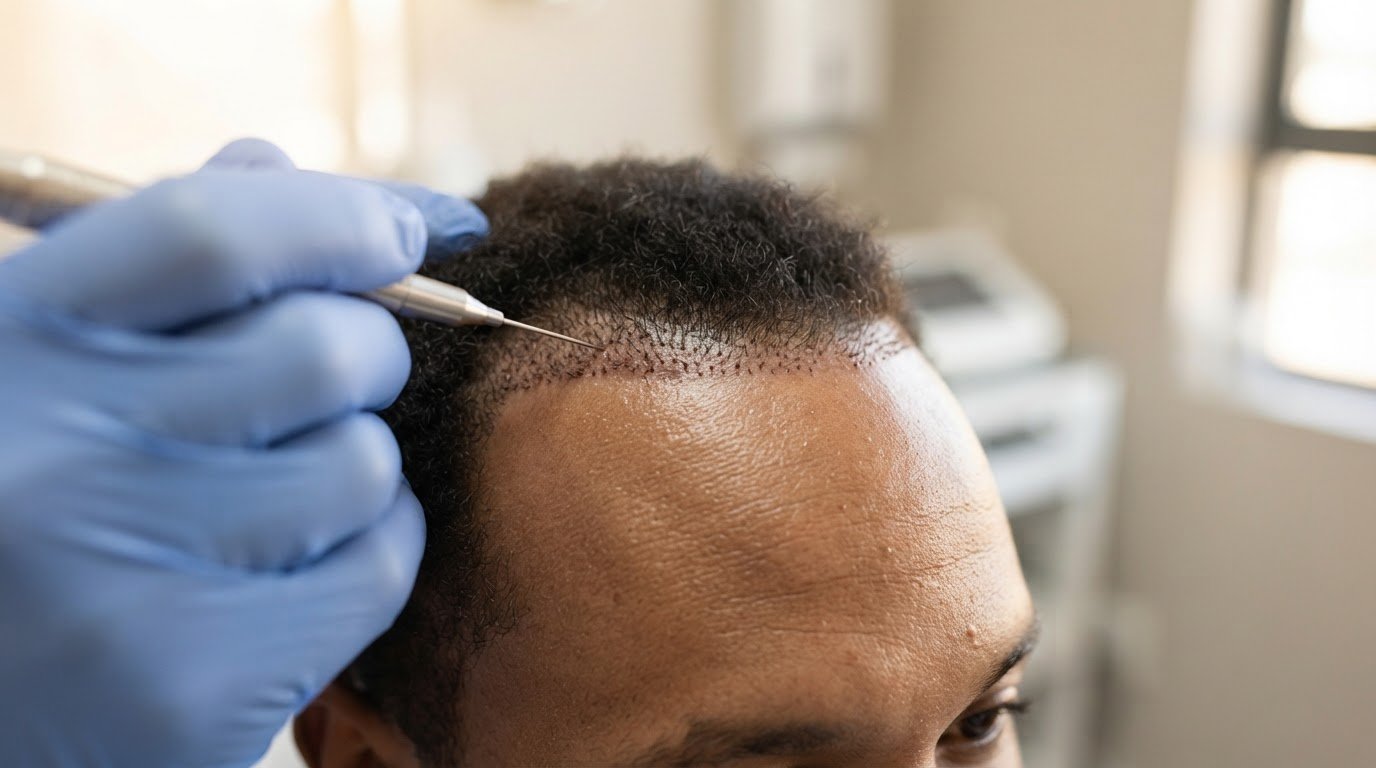
Shock loss commonly appears within the first eight weeks, while persistent pain, inflammation or tenderness needs attention. Without a clinical assessment, these signs cannot reliably distinguish shock loss from infection, scarring or a transplant problem.
Reasons to contact the surgeon
Contact your surgeon if new hair loss starts more than six weeks after the procedure. Also seek advice if shedding continues beyond the fourth month or if no new growth is visible by six months. These timings help the medical team assess whether your hair cycle is recovering as expected or needs further review.
Pain, inflammation or tenderness that does not improve within two to three days after surgery is another reason to get in touch. Describe when the symptom began, where it occurs and whether it is worsening. For example, report increasing tenderness around the recipient area rather than dismissing it as ordinary hair fall.
Shock loss can occur when surgical trauma disrupts the hair cycle, causing follicles to shed after a resting phase. Extraction and implantation both affect tissue, while planned density and follicle handling may influence stress on surrounding native hair. Surgical technique and careful planning matter, but every technique still requires recovery monitoring.
Distinguishing shock loss from complications
Shock loss typically appears as shedding in the weeks after surgery, without persistent pain or inflammation. By contrast, pain, inflammation or tenderness that continues beyond two to three days should be discussed with your surgeon. These symptoms do not prove infection, but they warrant assessment rather than a diagnosis based on appearance alone.
Scarring or transplant failure cannot be confirmed simply because hairs fall during early recovery. Visible shafts may shed while follicles remain beneath the skin, and new growth may take months to appear. A review around six months can assess areas where no regrowth is visible and identify whether another cause needs attention.
If you’re deciding what to do about shock loss after a hair transplant, note when it began, where it appears and whether there are other symptoms. If shedding starts outside the expected recovery pattern, this information can help your surgeon assess it. Knowing what to do also means seeking a review if no growth is visible by six months, rather than judging the outcome from shedding alone.
Shock loss after women's hair transplants
Women may face a higher risk of temporary shedding in the recipient area after hair transplant surgery. A retrospective study of 621 patients associated female sex with increased risk of temporary recipient-site effluvium. This describes a risk, not a certainty for every woman considering implantation.
One retrospective series recorded shock loss in 14 of the 67 women who underwent surgery. In that series, it occurred in roughly one in five women and fewer than two men in a hundred. Those figures come from a particular group, so they illustrate a difference in observed risk rather than predict an individual outcome.
Native hair is an important part of the picture. If existing strands around a planned recipient area are already fine or miniaturised, surgical handling and implantation may put extra stress on them. Some may enter a resting phase and fall out weeks later. This temporary shedding differs from transplanted hair shafts shedding while their follicles remain beneath the skin.
The balance between coverage and existing density matters too. For example, placing follicles among weakened native hairs may make post-operative thinning more noticeable. The affected area, condition of surrounding follicles, implantation density and surgical technique all shape how shedding looks. A careful assessment considers the pattern of hair loss, not just the area chosen for transplantation.
Extraction may also affect the donor area, where temporary shedding can make density look uneven during recovery. Donor-area shock loss usually resolves within three to six months. In the recipient area, native hairs that shed often return, although heavily miniaturised follicles may need supportive medical therapy. Consider regrowth and recovery together when assessing these patterns.
Shock loss after a hair transplant is generally described as temporary, but timing and extent vary. New hair may start to appear three to six months after surgery, while full results develop over 12 to 18 months. A quiet-looking scalp in the early months cannot, by itself, show whether regrowth will be complete.
The clearest takeaway is that women’s higher observed risk does not make shock loss inevitable or permanent. The 621-patient study and the 14-of-67 series show why expectations should account for native-hair condition, extraction and implantation, and the surgical plan. Tracking where shedding occurs and when it begins gives the surgeon useful context for assessing regrowth.
DHI South Africa: Hair Systems & Hairpieces
DHI South Africa offers Hair Systems & Hairpieces for people exploring a non-surgical hair-restoration option. If shedding has affected your confidence, this may be worth discussing as you consider your next steps. It is a different approach from waiting for post-transplant regrowth or considering another surgical procedure.
A hair system or hairpiece may suit someone seeking an appearance-focused option rather than medical treatment. It may also be relevant if you’re not ready to consider Direct Hair Implantation (DHI), or are weighing options during recovery. The discussion can focus on your goals, current hair loss and the change you want, without assuming one option suits everyone.
For people considering medical approaches, DHI South Africa also offers Direct Hair Implantation (DHI), GFC Treatment and Regenera Activa. These are distinct offerings, not interchangeable ways to address the same concern. A discussion can help clarify whether you want to explore surgical implantation, a treatment, or a hair system or hairpiece. If you’re still healing after a transplant, discuss symptoms and recovery with your surgeon; a hair system is not a substitute for medical assessment.
It may help to separate two needs: addressing a change in appearance and understanding why shedding is happening. Hair Systems & Hairpieces relate to the first. Questions about new or persistent hair fall, scalp discomfort or regrowth belong in a medical discussion. Keeping these aims distinct can make it easier to consider what matters to you now.
You don’t need to decide on a treatment before asking about the available approaches. Explain what has changed, whether you’re recovering from a transplant and what you hope to achieve. That gives the discussion a clear starting point, whether you’re interested in Hair Systems & Hairpieces or want to understand how another listed option relates to your hair-loss concerns.
If you’d like to discuss your options, contact DHI South Africa.
Frequently Asked Questions
What are the reasons for shock loss on the donor area?
Extraction can disturb nearby follicles and prompt a temporary shift in their growth cycle. This may cause thinning around the areas where hair was removed, not only where it was implanted. The pattern can look uneven, especially with shorter hair. Note whether the change appears across the donor area or in distinct patches, as this can help your surgeon assess it.
Can treatment make the hair grow back faster?
No treatment can make shed hair return overnight. Follicles need to move through their growth cycle before new strands emerge. A medical professional may discuss treatments such as minoxidil or finasteride if ongoing native-hair thinning is also a concern, but these are not quick fixes and may not suit everyone. Don’t start, stop or change medication after surgery without discussing it with your treating clinician.
Can I prevent shock loss naturally?
No natural method can reliably prevent shock loss. A balanced diet that includes protein supports general recovery, but cannot guarantee that follicles will not shed after surgical stress. Avoid adding high-dose supplements or applying oils and home remedies to a healing scalp without approval from your surgical team. For example, irritation from a new topical product can make changes in the treated area harder to assess.
Do all transplanted hairs fall out after surgery?
No. Some visible hair shafts commonly shed after surgery, but that does not mean every transplanted follicle has been lost. A shaft can fall while its follicle remains under the skin and later produces hair. Shedding varies between people and across the treated area. For example, some implanted hairs may fall while others remain visible, so a few shed strands alone cannot show what the final result will look like.
Does existing hair fall out after the hair transplant?
Yes, native hair near the treated area can shed temporarily after surgery. Looking at a fallen strand alone may not distinguish this from transplanted-hair shedding. Note where thinning appears and when you first notice it. Healthy native hairs often return, while heavily miniaturised hairs may not recover in the same way and may need medical support for ongoing thinning.
Is hair falling out after a transplant normal?
Some shedding is a recognised part of recovery, but not every change should automatically be treated as routine. Consider the timing, location and whether the scalp also feels painful or inflamed. For instance, note whether hair fall began in the recipient or donor area and whether it continues. Shedding that starts after early recovery or continues beyond the expected stages warrants discussion with your surgeon.
Is shock loss telogen effluvium or anagen effluvium?
Post-transplant shock loss is generally associated with telogen effluvium, in which follicles shift into a resting phase before affected hairs shed. Anagen effluvium involves hairs in the active growth phase and is not the usual description of post-transplant shedding. The terms describe different points in the hair cycle, not simply how much hair falls. A clinician can assess the pattern if shedding is unusual or persistent.
Can you prevent post-operative shedding?
There is no reliable way to prevent every instance of post-operative shedding. Careful surgical planning considers follicle health, extraction and implantation density, while following aftercare instructions helps protect the scalp during healing. A surgeon may also discuss medication, such as finasteride or minoxidil, to support surrounding hair in suitable cases. These medicines require individual medical guidance; don’t use them or change a prescribed dose independently.
Comments