

Traction Alopecia: How Hairstyles Can Prevent Further Hair Loss

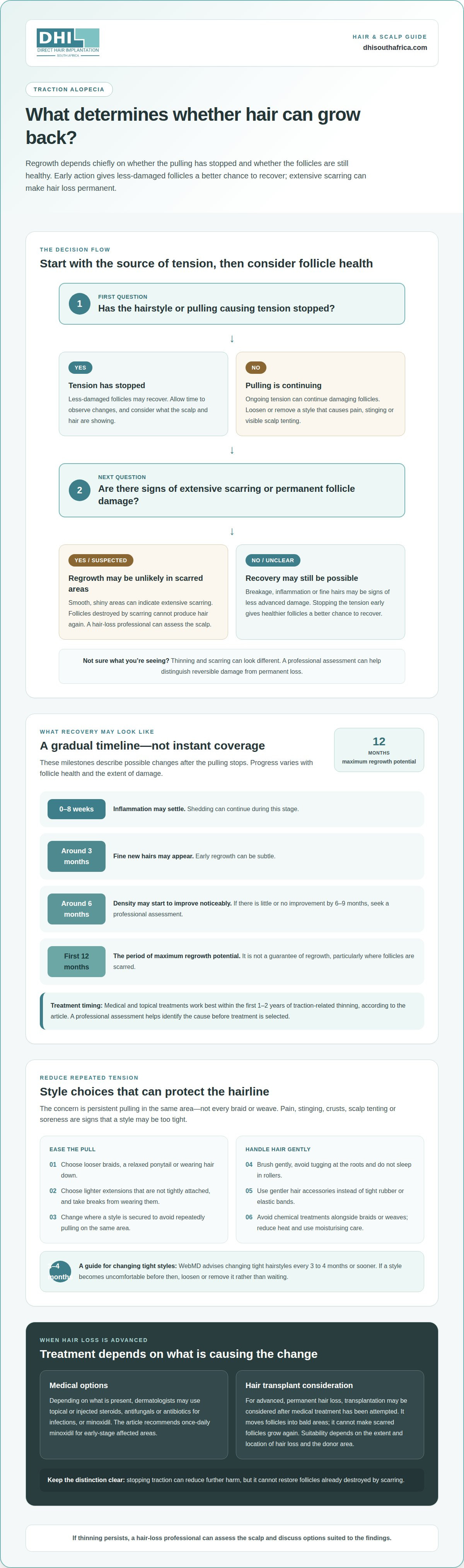
Traction alopecia can grow back if the follicles remain healthy and the pulling stops, but extensive scarring can make hair loss permanent. Whether traction alopecia grows back depends largely on how long the tension has continued and how much damage it has caused. Regrowth potential is greatest within 12 months of addressing the cause.
Noticing thinning or breakage around your hairline can be unsettling, especially if a hairstyle you enjoy may be contributing. Changing styles early can reduce ongoing tension and give less-damaged follicles a chance to recover. This article explains whether traction alopecia grows back, how early and chronic stages differ, what signs to look for, and how looser hairstyles and careful hair practices can help prevent further damage.
Table of Contents
Can Traction Alopecia be reversed?
Early traction alopecia may improve when you stop the hairstyle causing tension, provided the follicles remain healthy. The outlook changes if prolonged pulling has caused extensive scarring, as damaged follicles may no longer produce hair.
Hair regrowth timeline
The hair regrowth timeline describes how changes may appear after the pulling stops. During the first 0-8 weeks, inflammation may settle, although shedding can continue. Fine new hairs may appear around 3 months, followed by noticeable density improvement around 6 months. These stages help you judge progress without expecting immediate coverage.
The first 12 months after addressing traction are identified as the period of maximum regrowth potential. If there is little or no improvement by 6-9 months, seek a professional assessment. Medical and topical treatments work best within the first 1-2 years of traction-related thinning, while ongoing tension can continue damaging follicles.
Follicle scarring and permanent loss
Follicle scarring can permanently prevent a hair follicle from producing hair. Severe, long-term traction may destroy follicles, leaving smooth, shiny areas where natural regrowth is unlikely. This distinction matters: stopping tight styling can reduce further harm, but it cannot restore follicles already destroyed by scarring.
Extensive hair loss, bald patches, tenderness or inflammation can signal advanced damage. Smooth skin may look different from thinning areas where fine hairs remain. A hair-loss professional can assess the pattern and scalp, then tailor a plan to the findings. Early attention may help preserve follicles that are still viable.
Medical treatment options
Medical treatment aims to address inflammation, infection or thinning, depending on what is present. Options used by dermatologists include topical or injected steroids, antifungals or antibiotics for infections, and minoxidil. For early-stage affected areas, the guidance recommends applying minoxidil once daily. A professional assessment helps distinguish traction damage from other causes before treatment is selected.
For advanced, permanent hair loss, a hair transplant may be considered after medical treatment has been attempted. Transplantation moves hair follicles into bald areas, but it cannot make scarred follicles grow again. Suitability depends on the extent and location of hair loss and the condition of the donor area.
Visible thinning can affect confidence, social comfort and how you approach styling. Consistent photographs can make gradual changes easier to recognise. If the emotional strain feels heavy, sharing your concerns with someone you trust may help while you consider treatment options.
Preventing damage from hairstyles and weaves
Repeated pulling can strain the hairline and weaken hair, especially when a style feels tight or painful. Changing the hairstyle and reducing tension helps limit ongoing stress on the scalp.
Hairstyles linked to traction
Hairstyles that hold hair under repeated tension can pull at the roots, particularly braids, ponytails or extensions. Tight braids, cornrows, heavy weaves and firmly secured ponytails can all place stress on the hairline.
Weight and attachment matter too. Heavy or tightly fixed extensions can pull continuously, while chemical treatments used alongside braids or weaves may increase breakage. Watch for pain, stinging, crusts or tenting of the scalp. These are signs to loosen or remove a style rather than waiting for visible thinning.
Not every braid or weave causes damage. The concern is persistent tension in the same area, such as repeated pulling at the temples. If a style hurts during installation or leaves your scalp sore afterwards, it is too tight.
Stopping tight styles and scalp pulling
Stopping a style that pulls is the first practical step towards reducing further traction. Remove tight braids or extensions if they cause pain, stinging or visible scalp tenting. Continuing to wear them maintains pressure on the follicles.
Everyday handling can add strain. Brush gently, avoid tugging at the roots and don’t sleep in rollers. For ponytails, replace tight rubber or elastic bands with gentler accessories that hold hair without pulling. These small changes reduce repeated stress during styling and rest.
Give your scalp breaks between tension-heavy styles instead of moving straight from braids to another tight look. WebMD advises changing tight hairstyles every 3 to 4 months or sooner to reduce traction alopecia risk. If a style becomes uncomfortable before then, loosen or remove it rather than waiting for a calendar date.
Reducing tension through hairstyle changes
Looser styling puts less pressure on the hairline. Wearing your hair down, choosing a relaxed ponytail or asking for looser braids can reduce pulling on vulnerable areas. Changing where a style is secured also avoids repeatedly loading the same section of hairline.
For weaves and extensions, choose lighter options that aren’t tightly attached, and take breaks from wearing them. Avoid chemical treatments alongside braids or weaves, since they can weaken hair and increase breakage. Reducing heat and using moisturising care can also help limit damage to fragile strands.
If thinning continues despite changing your hairstyles, a scalp assessment can help clarify what is happening. Explore hair loss assessment and treatment options when ongoing changes need more than styling adjustments.
Reversibility of early versus chronic traction alopecia
The key distinction is the condition of the follicles: breakage and inflammation may improve after tension stops, while destroyed, scarred follicles cannot regrow hair. A professional can assess the pattern and scalp changes to distinguish reversible damage from permanent loss.
Early signs and symptoms
Early signs include changes around the hairline or scalp where a style repeatedly pulls. Small bumps, pimples or ulcers may appear, along with itching, stinging, redness or soreness. You may also notice short, broken hairs in strained areas.
These signs matter because they can appear before a smooth bald patch develops. Soreness at the temples beneath tight braids or breakage around a repeatedly pulled hairline, for example, deserves attention. Stop the tension-causing style and note where symptoms occur so you can discuss the pattern during an assessment.
Early detection and diagnosis
Early detection means recognising a pattern of symptoms and hair loss while tension-related damage is still limited. Diagnosis typically considers your history and the distribution of thinning, including whether it follows areas pulled by particular styles.
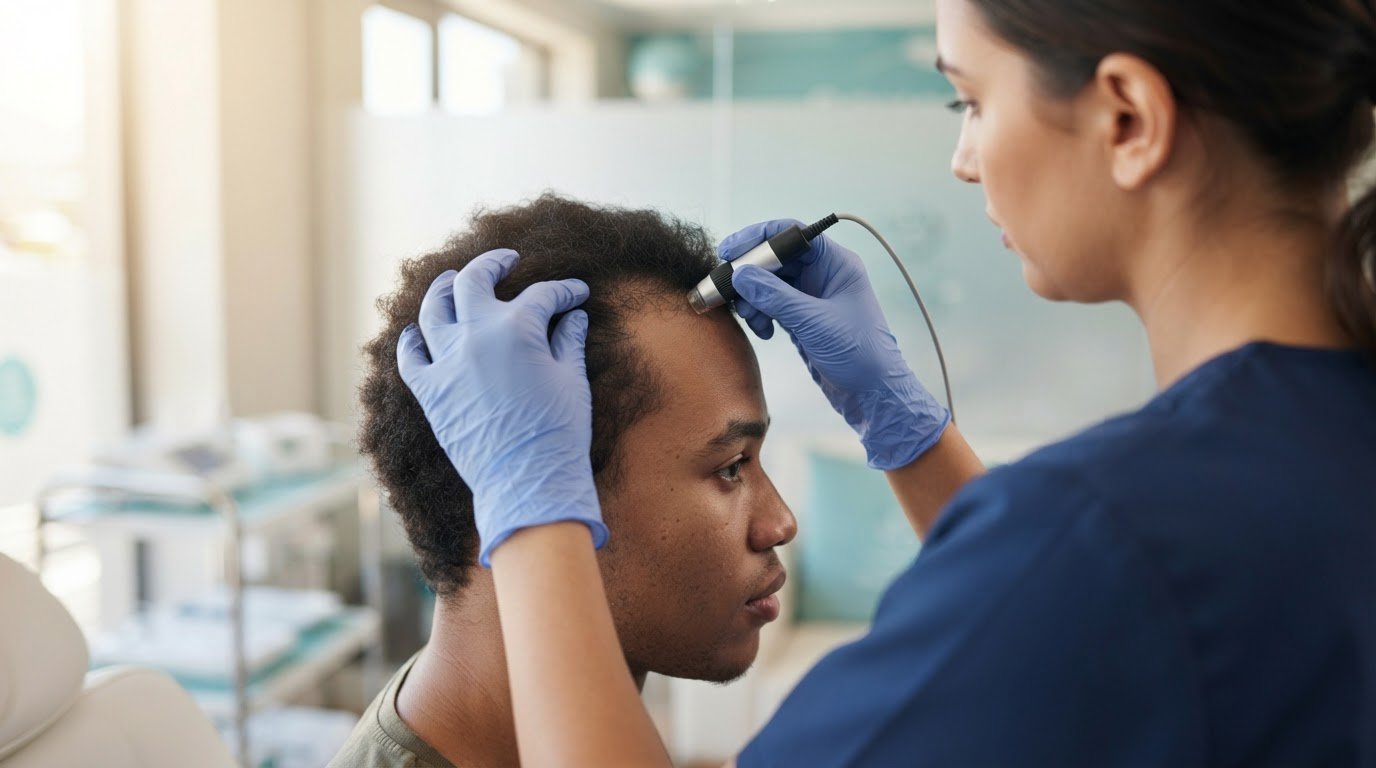
A scalp examination helps assess inflammation, broken hairs and visible follicle changes. If the cause remains uncertain or the case is complex, a scalp biopsy may be needed. This can involve taking at least two small specimens of scalp tissue and follicles. Identifying the cause matters because traction can occur alongside another scalp condition.
Signs of reversibility
Reversibility is more likely when affected areas show breakage or thinning without extensive scarring. Fine hairs in a strained area suggest follicles remain, although appearance alone cannot establish their full condition.
Chronic traction can progressively injure follicles. Persistent pulling may lead to smooth, shiny patches where extensive scarring makes natural regrowth unlikely. Stopping the stress from tight styles is still important, but it cannot revive follicles that have been destroyed.
Early and chronic stages therefore call for different expectations. In early traction alopecia, removing the source of tension may allow less-damaged follicles to recover. With longstanding loss, visible scarring changes the outlook and may mean natural regrowth is no longer possible.
A hair transplant may be considered for permanent traction-related loss after medical treatment has been attempted. It addresses areas where follicles no longer produce hair, but does not reverse the scarring itself. Assessment considers the affected area and whether transplantation suits the pattern of loss.
Track changes by noting which styles cause discomfort and where thinning appears. Photos taken under similar lighting can help show whether the hairline pattern is changing. This information gives a professional useful context when distinguishing ongoing traction from established, scarred loss.
Causes and affected areas of traction alopecia
Traction alopecia develops when repeated pulling or rubbing places ongoing stress on hair follicles. The location of thinning often reflects where a hairstyle or headwear applies that force.
Causes of traction alopecia
Traction alopecia is hair loss caused by repeated mechanical tension on the hair and scalp. Tight braids, cornrows and ponytails can pull persistently at their roots, while heavy extensions add weight to the same strands.
Headwear can also create friction and pulling. An ill-fitting cycle helmet, for example, may rub against the scalp and hair during repeated use. Tight night-time hair wrapping can add another source of pressure, particularly if the same areas remain under tension.
Styling products and chemical processes may compound the strain. Gels can contribute to risk, and combining chemical relaxers with braids can increase the likelihood of traction-related damage. The key factor is the cumulative effect: repeated pulling or rubbing can weaken hair and injure follicles over time.
Risk factors and affected areas
Risk relates to how often a style pulls, how tightly it is secured and how much weight it carries. Anyone who frequently wears tight or heavy hairstyles can develop traction alopecia. Repeating a high ponytail, for instance, places stress on similar roots each time.
Thinning commonly appears along the hairline, especially at the temples and forehead. This pattern is sometimes called loss of the edges. The affected area can offer a useful clue: thinning where braids are anchored suggests a different tension pattern from loss beneath a tight head covering.
Hair texture or styling tradition alone does not determine who develops traction alopecia. One study found the condition in 2% of African American men who wore dreadlocks or cornrows. That finding concerns the group studied; it is not a rate for every person who wears those styles.
Look for a connection between the location of hair loss and the point of pressure. Hairline thinning may correspond with tightly secured braids, for example, while rubbing beneath an ill-fitting helmet may affect the contact area. A pattern that follows repeated pulling can help explain the cause, but cannot establish whether follicles have scarred.
Keeping a simple record of hairstyles and where thinning appears can make recurring tension easier to identify. Note whether ponytails, braids, headwear or night-time wrapping affect the same area. This context can support an assessment, particularly if hair loss continues after you change the source of pulling.
Whether traction alopecia can grow back
Whether traction alopecia grows back depends on whether the affected follicles remain capable of producing hair. Early damage can improve after the pulling stops; follicles destroyed by prolonged traction cannot regrow hair. The practical distinction is between thinning with surviving follicles and permanent loss where extensive scarring has damaged them.
Consider the pattern as well as the hairstyle. Breakage where tight braids are anchored, for example, points to repeated strain in that area. Hair loss that continues after removing braids or extensions needs closer assessment, because thinning alone cannot show whether follicles are scarred.
Stopping the source of traction is essential to prevent further mechanical injury. Replace tight ponytails with a loose style, remove extensions that pull, and avoid returning to braids that recreate tension in the same place. These changes protect follicles that still function, but do not reverse damage already caused by scarring.
Regrowth is gradual, so don’t judge change by immediate coverage alone. Fine hairs, reduced breakage and a less inflamed scalp can provide useful signs of improvement. Compare the affected area under similar lighting and note any changes after adjusting your styling practices.
A professional assessment can evaluate the distribution of thinning, scalp condition and evidence of scarring. These findings help distinguish traction alopecia from another cause of hair loss and guide treatment choices. If the diagnosis is uncertain or other scalp concerns are present, further investigation can clarify the cause before a treatment plan is selected.
For follicles that remain viable, medical treatment can form part of a tailored approach. Where loss is permanent and medical treatment has been attempted, a hair transplant may be considered for suitable cases. Transplantation addresses areas where follicles no longer produce hair; it does not restore the original follicles or remove the underlying scar.
The clearest takeaway is to address ongoing tension early, then have the scalp assessed if thinning persists. Braids, extensions and tight ponytails can maintain traction when they repeatedly pull on the same roots. If smooth, shiny areas develop or hair loss continues, an assessment can establish whether regrowth remains possible or another restoration approach may be relevant.
DHI South Africa: Direct Hair Implantation (DHI)
DHI South Africa offers Direct Hair Implantation (DHI) for people considering hair restoration after traction-related loss. If thinning continues after you stop tension-causing styles, or scarring has left areas without regrowth, an assessment can help establish whether transplantation is suitable. The affected scalp and pattern of hair loss inform that discussion.
DHI cannot restore follicles destroyed by traction. It may be considered as a restoration option for appropriate cases of lasting hair loss, alongside a plan to prevent further tension. Depending on your needs, other options may include GFC Treatment, Regenera Activa or PRP Hair Loss Treatment.
For a considered discussion of your hair loss and possible next steps, contact DHI South Africa.
Take the next step with clarity
The question of whether traction alopecia grows back can feel personal, especially when changes to your hair affect your confidence. Treat the next step as a practical decision: understand what is happening at the scalp, then consider which options fit your needs. You don’t have to decide on treatment before getting a clearer picture of your hair loss.
A considered assessment can help you discuss your concerns, understand possible approaches and decide what feels right for you. Mention the hairstyles you wear, when you first noticed thinning and any changes you’ve made. These details can shape a more informed conversation about your goals and the options available.
You can start with a conversation, at your pace and without pressure. A clearer understanding of your situation can make the path ahead feel more manageable.
Your next step can be simple: seek clarity, then move forward with confidence.
Frequently Asked Questions
Does hair grow back after traction alopecia?
Whether traction alopecia grows back depends on how much damage the follicles have sustained. Hair may return if follicles remain capable of producing it and the pulling stops. Follicles destroyed by prolonged traction and extensive scarring cannot regrow hair. If you’re unsure which applies, note whether the area has broken hairs or smooth, shiny skin, then arrange an assessment rather than relying on appearance alone.
How long does it take for hair to regrow after stopping tight hairstyles?
Visible fullness can take longer to return than the first signs of new hair. Short, fine hairs may emerge before they are long enough to blend with surrounding hair or change how dense an area looks. Early regrowth can therefore be easy to miss, especially along the hairline. Look for changes in the hair itself, not only whether the scalp appears fully covered.
What are the early signs and stages of traction alopecia?
Early signs include itching, stinging, redness or soreness where hair is pulled, along with small bumps or broken hairs. The pattern may begin at the hairline or another area under repeated strain. Continued tension can progress from breakage and thinning to more extensive loss and scarring. Recurring soreness beneath a hairstyle followed by short, broken hairs, for example, is a reason to change the style and pay attention to the affected area.
Which hairstyles and hair practices cause traction alopecia?
Styles that repeatedly pull on hair can contribute to traction alopecia, including tight braids, cornrows, ponytails and heavy or tightly attached extensions. Tight night-time wrapping, rollers worn in bed and elastic bands that tug at the roots can add strain. Chemical relaxers used with braids may increase breakage risk. A style that causes pain, stinging or scalp tenting is too tight; loosen or remove it.
How is traction alopecia treated, and when should treatment start?
Treatment starts by removing the source of tension, such as tight braids or a high ponytail, as soon as symptoms appear. A clinician may consider topical or injected steroids for inflammation, minoxidil for early-stage thinning, or antifungals or antibiotics if infection is present. Treatment depends on the scalp findings and cause. Don’t start medication solely because a hairstyle-related pattern seems familiar; other conditions can also cause hair loss.
When should someone see a dermatologist for traction alopecia?
Arrange a dermatology assessment if hairline thinning continues, the scalp is inflamed or tender, or smooth, shiny patches appear. A dermatologist can examine the distribution and your hairstyle history to assess whether traction is likely. Seek assessment sooner if symptoms persist after removing the pulling style, or if loss spreads beyond areas under tension. Lack of improvement after a period without tension is another reason to seek professional review.
What treatments are available for permanent traction alopecia, such as hair transplantation?
For permanent loss, a hair transplant may be considered after medical treatment has been attempted, provided the affected area and donor hair make it suitable. Direct Hair Implantation (DHI) is a hair-restoration option; it does not revive follicles destroyed by scarring. Scalp Micropigmentation (SMP) can create the appearance of greater density without regrowing hair. A hair-restoration assessment can help clarify which approach fits your pattern of loss and goals.
Can minoxidil help traction alopecia, and what are its risks?
Minoxidil may be applied once daily to areas affected by early-stage traction alopecia.


Comments