

Ways to cope with hair loss emotions through support and care

Hair loss can affect how you feel about your appearance, confidence and social life. Coping with hair loss emotionally starts with acknowledging your feelings without judging or hiding them, and finding support that feels right for you.
If you feel shocked, angry or sad, those responses are understandable. Talking with someone you trust, joining a support group or speaking with a mental health professional may help you process your feelings. Gentle self-care and practical choices, such as scarves, hats or wigs, can also help you feel more comfortable.
This article explores ways to protect your self-esteem, talk about what you’re experiencing and recognise when extra support could help. It also covers temporary ways to manage your appearance while you consider what feels right for you.
Table of Contents
1. Self-esteem and body image
Hair loss can change how you see yourself, particularly when appearance feels closely tied to your identity. You might avoid photographs, feel uneasy meeting new people or check your hairline repeatedly in mirrors. These reactions can affect confidence at work and in relationships. Start by identifying situations that trigger difficult feelings. For example, notice whether social events, video calls or particular photographs cause the most discomfort.
Appearance-focused social media can intensify dissatisfaction with hair, particularly for men experiencing balding. Curated images can encourage constant comparison, even though they show selected moments and styles. Notice how you feel before and after scrolling. If your mood worsens, unfollow accounts that prompt comparison and choose content that reflects a wider range of interests, skills and everyday life.
To explore the psychological effects of hair loss, watch this video from The Hair Loss Show:
Self-compassion doesn’t mean pretending hair loss feels unimportant. It means treating yourself with the care you’d offer a friend. When a thought such as “I look terrible” comes up, pause and recognise it as a painful thought, not an objective measure of your worth. Then name a quality that matters to you, such as humour, patience or creativity.
Your identity includes more than appearance. Write down roles and activities that still feel meaningful, such as being a parent, colleague, musician or friend. A body-functionality writing exercise can help shift attention towards what your body enables you to do. Set aside at least 15 minutes to write continuously about movement, communication, work or caring for others.
Self-acceptance can develop alongside practical choices. Some people express themselves through clothing or makeup, while others embrace their natural look. You can try a different style without making it a requirement for confidence. The Expand Your Horizon programme was associated with increased appearance satisfaction, functionality satisfaction and body appreciation, alongside lower self-objectification among participants.
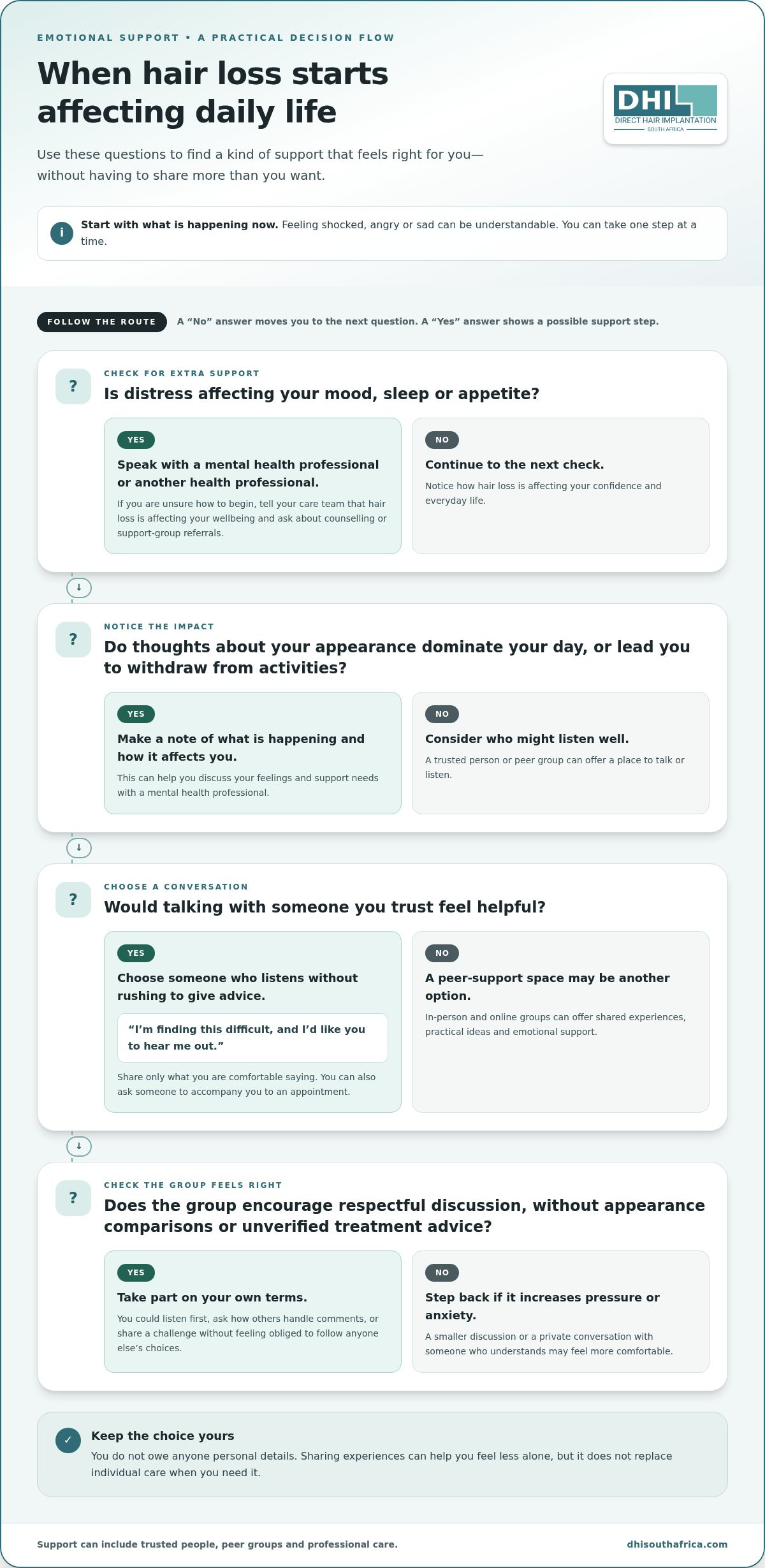
Hair loss can coincide with anxiety, depression or intense concern about a perceived physical flaw. If thoughts about your appearance dominate your day or lead you to withdraw from activities, record what is happening and how it affects you. This can help you discuss your feelings and support needs with a mental health professional.
2. Support from loved ones and support groups
A trusted person can offer perspective when hair loss starts shaping your daily decisions. Choose someone who listens without rushing to give advice, then explain what would help: “I’m finding this difficult, and I’d like you to hear me out.” A friend or family member could also accompany you to an appointment or help you find a support group. Specific requests make it easier for others to respond with care.
When talking with family, friends or colleagues, choose a private moment and share only what you’re comfortable saying. For example: “I’m losing my hair, and I’d rather not discuss treatments at work, but I appreciate your understanding.” You don’t owe anyone personal details. A brief boundary can reduce awkward questions and keep the conversation on your terms.
Parents can support a distressed child by listening calmly, acknowledging their feelings and asking what might make school or social situations easier. Help the child prepare a simple response to classmates, for example, and involve a health professional if distress persists or affects everyday activities.
Peer support offers a different kind of understanding. In-person and online groups give people experiencing alopecia a place to share experiences, practical ideas and emotional support. You could listen first, ask how others handle comments or share a challenge without feeling obliged to follow anyone else’s choices. A useful group respects different causes of hair loss and personal decisions.
Look for peer-support spaces that encourage respectful discussion rather than appearance comparisons or unverified treatment advice. Notice how you feel after taking part. If a group increases pressure or anxiety, step back and try another format, such as a smaller discussion or a private conversation with someone who understands your situation.
Support from loved ones may not be enough if distress starts affecting your sleep, appetite or mood. These symptoms are a reason to speak with a mental health professional or another health professional. If you’re unsure how to begin, tell your care team that hair loss is affecting your wellbeing and ask about counselling or support-group referrals.
Sharing experiences can help you feel less alone, but it doesn’t replace individual care when you need it. A counsellor or therapist can help you work through anxiety, relationship concerns or difficult conversations at work. Before an appointment, write down one or two situations that feel hardest, such as avoiding social plans or worrying about a partner’s reaction.
If you’re looking for a starting point for understanding hair loss, explore this hair loss information. Keep the next step manageable: choose one trusted person to talk to, or identify a peer group where you can listen before deciding whether to share.
3. Seeking help from a therapist or mental health professional
Hair loss can trigger anxiety that feels difficult to manage alone. A therapist or mental health professional can help you describe what feels hardest, explore its impact on daily life and develop coping strategies suited to your circumstances. You could start by describing a recent moment, such as cancelling plans because you felt self-conscious.
Before an appointment, write down the thoughts and situations that cause distress. For example, note whether photographs, workplace meetings or dating raise concerns about your appearance. This gives you a practical starting point and helps the professional understand what support you want. You can also say if you’d rather focus on emotional coping than treatment decisions.
Cognitive behavioural therapy, often called CBT, can help people manage psychological stress associated with hair loss. In CBT, you work with a therapist to notice links between thoughts, feelings and behaviour. If you think, “Everyone will stare”, you could examine what supports that belief and consider a more balanced response before attending an event.
CBT can also address how negative beliefs about appearance affect self-worth and social choices. A clinical psychologist can help you practise handling uncomfortable conversations, such as preparing a short response when someone comments on your hair. Sessions can focus on real situations, then review what helped and what you might change next time.
Acceptance and Commitment Therapy offers another practical approach. One technique is to label a troubling thought as a thought, rather than a fact. For instance, try saying, “I’m having the thought that my hair defines me.” This can create some distance from the thought without requiring you to deny your feelings or force positivity.
A mental health professional can tailor strategies to your needs and preferences. You might work on expressing concerns to a partner, returning to social activities or responding to distressing thoughts. If an approach doesn’t feel useful, discuss that openly. Follow-up support can help adjust therapeutic strategies as your experience changes.
Therapy isn’t a test you need to pass. You can bring notes, ask what a session will involve and take time to explain your priorities. If speaking feels difficult, start with a sentence such as, “Hair loss is affecting my confidence, and I’d like help managing the emotional impact.”
Seeking support doesn’t mean your feelings are trivial or that you need a diagnosis. It gives you space to understand their impact and choose practical next steps. If hair loss is leading you to avoid important parts of life, or anxiety feels hard to manage, arranging a conversation with a professional can be a constructive step.
4. Choosing scarves, hats, or wigs
Temporary coverings give you a choice in how you present yourself while your hair changes. A scarf, hat, wig or hairpiece may help you feel more comfortable at work, at home or during social plans. You don’t have to choose one look for every setting. Try different options and notice which feels most like you.
While waiting for hair loss treatment to work, choose temporary coverings that suit your routine and keep up activities that support your wellbeing, such as gentle exercise. Treatments can take up to a year or more before results appear, so consider practical ways to feel comfortable in the meantime.
Start with the situations you want a covering for. A soft hat might suit a walk outdoors, while a scarf could feel right for a family gathering. If you’re considering a wig, try it with clothes you already wear. A familiar outfit can help you judge whether the colour, shape and overall style feel natural to you.
Comfort matters as much as appearance. Check that a hat or scarf sits securely without causing pressure or irritation, and try it at home for a short time. For a wig or hairpiece, move your head and sit as you normally would. These simple tests can show whether it feels suitable for a full day.
Scalp exposure can feel especially noticeable with alopecia areata or other forms of hair loss. Hats, scarves and wigs can help protect bare skin from the elements. Choose a covering that feels comfortable outdoors, and keep a lighter option available indoors if you prefer less coverage. Your needs may vary with the weather and setting.
Styling a scarf gives you room to experiment without committing to one look. Try a plain colour with patterned clothes, or a printed scarf with a simpler outfit. If tying it feels difficult, practise at home and use a mirror to check how it sits. You could also ask someone you trust for practical help.
A wig or hairpiece can create a different silhouette, but it doesn’t need to match your previous hairstyle. Consider the length and style you enjoy, then see how it looks in daylight and under indoor lighting. Some people prefer a close match; others use hair loss as a chance to explore a new look.
Make the choice your own. You might wear a hat for errands, use a scarf for a special occasion or go without a covering when that feels comfortable. Keep your preferred option somewhere easy to reach, such as near the door. Having a ready choice can make getting dressed simpler on difficult mornings.
5. Emotional responses to hair loss
Hair loss can bring shock, denial, anger and sadness, sometimes in quick succession. You might feel composed at breakfast, then become upset after noticing more hair on your pillow. Treat these as feelings to notice, not evidence that you’re handling the situation badly. Naming an emotion, such as “I feel frightened today”, can help you understand what you need next.
Hair loss caused by chemotherapy or illness may bring distress about appearance alongside worries about health, treatment and recovery. It can also leave someone feeling a loss of control, particularly when changes happen quickly. If this is your experience, tell your care team what feels hardest, including practical concerns about treatment or how others might respond.
The emotional effects can be substantial for people with alopecia areata. Adults with the condition were reported to be 30 to 38% more likely to be diagnosed with depression, and a 2022 study found anxiety in about 33% of adults with alopecia areata. These figures describe groups, not an individual’s experience, but they underline why emotional wellbeing deserves attention alongside physical health.
Stigma, teasing or unwanted questions can leave you feeling exposed. Prepare a short response that suits the situation, such as “I’d rather not discuss my hair” or “It’s a personal matter.” At work or school, you can repeat your boundary and change the subject. You’re allowed to end an intrusive conversation.
Some people avoid social events, photographs or workplace challenges because they fear others’ reactions. Choose one manageable activity you’ve stopped doing, then decide what might make it easier to try again. For example, meet one friend for coffee before returning to a larger gathering. Small steps can help rebuild confidence without requiring you to feel ready for everything.
Stress and worry may affect the experience of hair loss, and alopecia areata can involve cycles of loss and regrowth. That doesn’t mean you caused the condition by feeling anxious. Try a brief breathing exercise before a stressful appointment, or write down the main worry you want to discuss with your care team.
Make space for your emotions rather than forcing an immediate positive outlook. Writing about a difficult moment can help you identify triggers, what you told yourself and what helped afterwards. If low mood or anxiety persists, or starts disrupting sleep, appetite or daily life, speak with a mental health professional. Seek urgent help if you feel at risk of harming yourself.
DHI South Africa: Direct Hair Implantation (DHI)
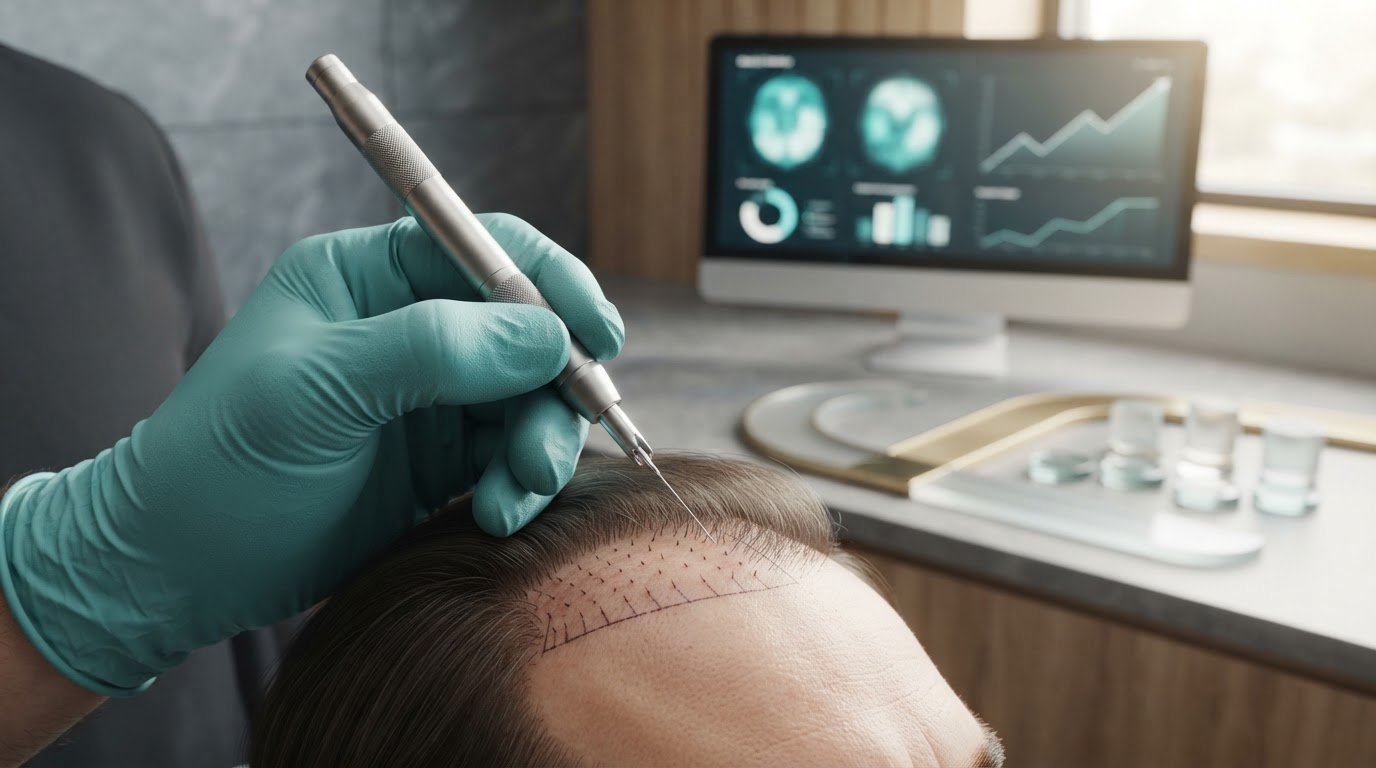
DHI South Africa offers Direct Hair Implantation (DHI) for people exploring a surgical hair restoration option. If you’re considering treatment, discuss your hair loss concerns and what you hope to achieve before deciding whether this approach suits you.
Other options include GFC Treatment, Regenera Activa and PRP Hair Loss Treatment. These are different approaches to hair loss care, so understanding what each involves can help you have a more informed conversation about next steps. Emotional support remains valuable alongside any treatment decision.
Explore the available options at your own pace and bring the questions that matter to you. Contact DHI South Africa to discuss your concerns and learn more about its hair restoration services.
Contact DHI South Africa
Choose a next step that feels right for you
Your relationship with your appearance can change over time, and you don’t need to settle every question at once. When coping with hair loss emotionally, focus on a next step that supports your wellbeing and priorities. That might mean making space for an honest conversation, seeking professional support or exploring whether hair restoration fits your goals.
If you’re considering treatment, take time to understand the options and raise the questions that matter to you. A thoughtful discussion can help you decide what to explore next, without treating one choice as right for everyone. Your feelings deserve care alongside decisions about your hair.
Small, considered steps can help you move forward with greater confidence. You deserve support that respects your experience and the choices that feel right for you.
Frequently Asked Questions
How can I cope emotionally with hair loss?
Choose one manageable action that supports you today, rather than trying to solve everything at once. You could tell someone you trust what kind of response would help, or keep a brief note of situations that trigger distress. Coping with hair loss emotionally can also mean making room for treatment questions while protecting time for relationships, interests and routines beyond your appearance.
What feelings are common after experiencing hair loss?
People may experience shock, sadness, anger, embarrassment or anxiety, and these feelings can shift over time. You might feel differently after a haircut, a photograph or someone’s comment. Try naming the feeling and what happened just beforehand. That can help you decide whether you need a conversation, a quiet break or support with a particular situation.
What practical steps can help build self-esteem and confidence with hair loss?
Choose an activity that reminds you of a strength you value, such as contributing an idea during a meeting or returning to a hobby. Set a small, realistic goal and recognise the effort, not just the outcome. You could also plan an outfit or hairstyle that feels comfortable before an event. These steps can help build confidence beyond appearance alone.
Can support groups or counselling help people cope with hair loss in South Africa?
Yes. A support group can connect you with people who understand the everyday experience of hair loss, whilst counselling offers space to explore your own concerns. For example, a group may help you prepare for social questions, while individual sessions can focus on anxiety or changes in relationships. The right format depends on whether you prefer shared discussion or private support.
How can I find a hair loss support group or therapist in South Africa?
Ask a health professional involved in your care whether they can suggest counselling or peer-support options. You can also look for online or in-person groups that discuss hair loss and emotional wellbeing. Before joining, consider whether the group feels respectful and distinguishes its advice from medical guidance. If you see a therapist, explain that you want help with the emotional effects of hair loss.
When should emotional distress related to hair loss prompt professional help?
Consider professional support if distress affects sleep, appetite, work, relationships or activities you usually value. Notice patterns, such as repeatedly cancelling plans or struggling to concentrate, and describe them during an appointment. If you feel at risk of harming yourself, seek urgent help from local emergency services or a health professional. You deserve timely support for emotional distress as well as physical concerns.


Comments