

Working Out After Hair Transplant: When Can You Run and Lift

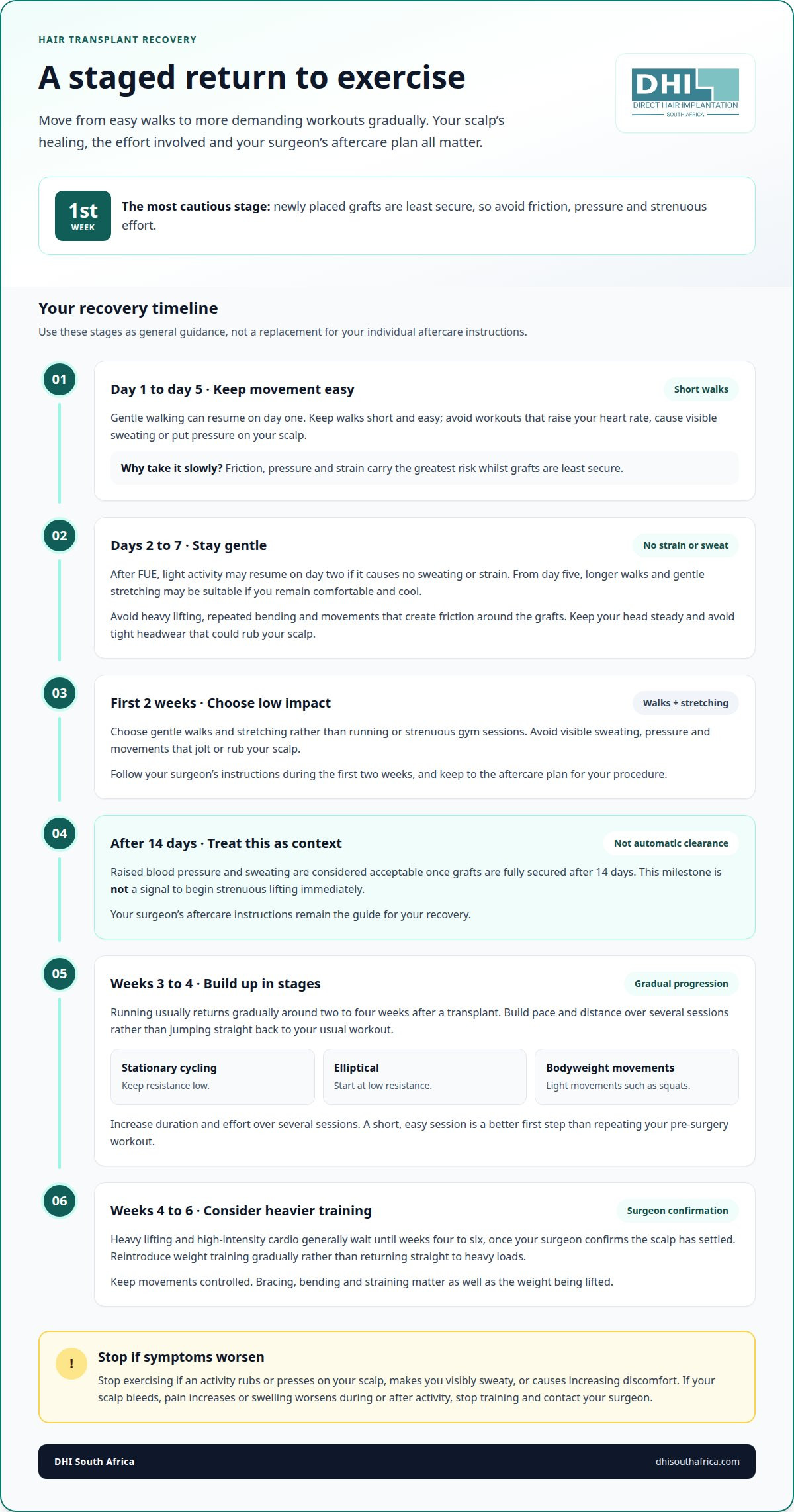
Ready to lace up again after your transplant? When working out after a hair transplant, start with gentle activity: take short, easy walks in the first few days and wait around two to four weeks before running. Build up gradually instead of jumping straight back to your usual pace or distance.
It’s understandable to want to protect your results while maintaining your fitness routine. Just as with body contouring and other surgical aesthetic treatments highlighted by providers like Brazilian Medical Center, sweat, pressure and strenuous effort can affect healing, so your return depends on the type and intensity of exercise. This guide explains when to restart walking, running and weight lifting, why it’s sensible to avoid heavy sweating early on, and how to increase intensity carefully.
Table of Contents
Why exercise restrictions matter during early graft healing
During the first week after hair transplant surgery, newly placed grafts are least secure, so friction and pressure from exercise carry the greatest risk. Gentle movement can resume sooner than strenuous training, but take care to protect the healing scalp.
Exercise timing after surgery
Return to exercise in stages, moving from easy walks to more demanding activity. Gentle walking can resume on day one, while regular running usually returns around two to four weeks after surgery. Heavy lifting and high-intensity cardio generally wait until weeks four to six, once the surgeon confirms the scalp has settled.
After FUE, light activity may resume on day two if it causes no sweating or strain. From day five, keep activity gentle and avoid visible sweating, straining and pressure on the scalp throughout the first week. Follow your surgeon’s instructions during the first two weeks. South African clinic recommendations should centre on this gradual progression and the aftercare plan for your procedure. The hair transplant procedure forms part of that recovery context.
First-week movement limits
In the first week, avoid workouts that raise your heart rate, cause visible sweating or put pressure on the scalp. During days one to five, keep movement to short, easy walks, as the grafts are least secure during this period.
From days five to seven, you can add longer walks and gentle stretching if you remain comfortable and cool. Avoid heavy lifting, repeated bending and movements that create friction around the grafts. A measured routine supports healing without making an early return to normal exercise the priority.
Low-impact options during recovery
Low-impact exercise helps you control your effort as you rebuild your routine. During the first two weeks, choose gentle walks and stretching rather than running or strenuous gym sessions. Keep your head steady and avoid tight headwear that could rub your scalp.
In weeks three to four, you could try stationary cycling, an elliptical at low resistance or light bodyweight movements such as squats. Gradually increase duration and effort over several sessions. A short, easy session is a better first step than immediately repeating your pre-surgery workout.
Exercise risks and warning signs
Exercising too soon can expose healing grafts to friction, pressure, strain and sweat when they are least secure. The risks are greatest in the first week. Stop if an activity rubs or presses on your scalp or makes you visibly sweaty.
Stop exercising and contact your surgeon if your scalp bleeds, pain increases or swelling worsens during or after activity. Pause rather than pushing through these symptoms. Resume only within the activity limits in your aftercare plan, especially before returning to running, weights or high-intensity training.
When can I start weight lifting after my hair loss surgery?
Weight training combines muscular effort, changes in blood pressure and often sweating. Return gradually, rather than trying to match your pre-surgery performance straight away.
Heavy lifting and excessive sweating
Heavy lifting involves more than the weight on the bar: bracing, bending and straining add effort too. During early recovery, avoid heavy loads and movements that make you hold your breath or bear down forcefully. Choose controlled movements, keep your head comfortable and avoid repeatedly bending to lift equipment from the floor.
Excessive sweating can make your scalp uncomfortable and tempt you to wipe or rub it. Keep activity controlled, and avoid friction around the treated area if your scalp becomes damp.
Sweat-related scalp irritation
Perspiration, heat or friction can irritate a healing scalp. A tight cap or headband, or a towel rubbing the area, can add irritation during a lifting session. Avoid touching or wiping the recipient area, and stop if exercise makes it sting or feel increasingly uncomfortable.
When you resume training, choose a cooler setting and clothing that doesn’t press against your scalp. Follow your prescribed washing routine after exercise instead of scrubbing your scalp or applying unapproved products.
Sweating and graft safety
Sweating relates to graft safety mainly through the effort and contact involved in a workout. Perspiration itself is not the same as direct pressure or friction, but intense lifting can combine sweat with strain and repeated movement. Keep your technique controlled, avoid movements that jolt your head and increase the load in manageable steps.
Raised blood pressure and sweating are considered acceptable once grafts are fully secured after 14 days. Use that milestone as context, not as a signal to begin strenuous lifting immediately; your surgeon’s aftercare instructions remain the guide for your recovery.
Sweat and infection risks
Sweat alone does not mean you have an infection. Reduce avoidable contact during exercise by using clean hands and keeping shared towels away from the recipient area. Don’t scratch or scrub healing skin after a session.
If you notice increasing pain, bleeding or worsening swelling, stop training and contact your surgeon. These symptoms call for medical advice, not a harder workout.
When can I start running after my hair transplant?
Running usually returns gradually around two to four weeks after hair transplant surgery. Wait until your scalp has healed before swimming, and avoid saunas and steam rooms during recovery. Scabs or crusts can affect when swimming is appropriate, so consider their condition as well as the calendar.
Gentle movement during early recovery
Gentle movement during recovery means choosing activities that don’t jar your scalp or quickly become strenuous. Once your aftercare plan allows movement, keep the pace conversational and avoid sudden acceleration, steep hills or repeated head movement. This lets you maintain some routine without treating an early jog as a test of your previous fitness.
When working out after a hair transplant, consider effort as well as distance. A short, easy session offers a more controlled return than immediately attempting your usual route.
Activities to avoid early on
Activities to avoid early on are those that bring impact, contact or pressure to the scalp. Contact sports, CrossFit and inverted yoga are discouraged during the first 10 to 14 days. A helmet can also press against the recipient area, so avoid using one during the first 14 days if possible.
These restrictions matter even if a jog feels manageable. A fall, collision or rubbing headgear creates different risks from steady running.
Matching activity to individual recovery
Matching running to recovery means building towards your normal pace and distance over several sessions. Light jogging may suit a seasoned runner around day 14, while a gradual return to regular distances and speeds generally falls around days 21 to 28. Keep early runs short and easy, then increase distance or pace in stages.
Let your surgeon’s aftercare instructions guide your timing, especially if your scalp remains sensitive or scabs are present. A progressive plan for working out after a hair transplant leaves room to adjust your effort as recovery progresses.
Sweating, swimming and sauna use
Sweating, swimming and sauna use place different demands on the healing scalp. Avoid saunas and steam rooms for at least 14 days, and don’t swim before that point. Heat can increase perspiration, while swimming adds water exposure and movement to your recovery routine.
If scabs or crusts remain, wait around 28 days before swimming and until they have cleared. Resume running with an easy pace, then increase distance and speed gradually across several sessions.
Can I sweat 10 days after a hair transplant?
Yes, moderate activity with sweating and light straining can resume 10 days after a hair transplant. That doesn’t make every gym session suitable: consider how much effort, scalp movement and equipment contact the workout involves.
Returning to the gym
A gym return is a chance to test controlled movement, not to make up for missed sessions. At day 10, choose a quiet time and a manageable session, then avoid crowded areas where another person or moving equipment could bump your head. Keep towels and hands clean, and don’t wipe or rub the recipient area while exercising.
Pay attention to your surroundings, too. A hot room can increase sweating, while a tight cap or headband may press on your scalp. Choose a cooler space and clothing that doesn’t rub the treated area. Follow your prescribed scalp-care routine after training instead of adding products.
Resuming weight training
For weight training, your lifting technique matters as much as the equipment. Use controlled movements, keep your head neutral and avoid forceful bracing or holding your breath. These adjustments reduce unnecessary strain and repeated bending towards weights on the floor.
Light machine exercises can help you keep your movements steady, while heavy or strenuous sets demand more effort and control. Don’t use a training partner’s usual load as your target. Choose resistance that lets you move smoothly without straining, and stop if pressure or discomfort develops around your scalp.
Cardio and light gym workouts
Cardio at day 10 should remain moderate, with a pace you can control from start to finish. A treadmill walk or stationary bike makes it easier to adjust speed and effort than sprint intervals or a fast-paced circuit. Keep the session simple, and avoid movements that make your head jolt or rub against equipment.
Afterwards, notice whether perspiration has left your scalp uncomfortable, and avoid scratching or scrubbing it. Sweat alone doesn’t mean infection, but increasing pain, bleeding or worsening swelling means you should stop training and contact your surgeon. A measured session gives you useful feedback without turning exercise into an endurance test.
Resuming moderate weights and increasing workout intensity
You can reintroduce moderate weights gradually during weeks two to four after a hair transplant. More strenuous training usually needs to wait until later in recovery.
Resuming moderate weights
Resuming moderate weights means returning to controlled resistance before attempting heavy or demanding lifts. During weeks two to four, increase exercise intensity and duration gradually, using manageable weights and steady movements. For example, restart with light machine work rather than heavy free-weight sets. This staged approach limits strain as you rebuild your routine.
Return to weight training gradually rather than jumping straight to maximum effort. Allow several sessions to rebuild tolerance. If a movement causes scalp discomfort or makes you strain heavily, reduce the load or stop that exercise.
Increasing workout intensity
Increase intensity in small stages rather than changing pace, duration and resistance all at once. After a gentle session, progress one element at a time, such as adding duration before increasing resistance. This makes it easier to notice whether an activity causes discomfort or excessive strain.
Wait three to four weeks before more intense exercise, including strenuous lifting or intense cardio. Contact sports require a longer wait because collisions may affect the scalp. Use your recovery plan to guide each step, and don’t treat returning to normal training as a single event.
Weightlifting after surgery
Weightlifting strains the body and can raise blood pressure, so return to heavy lifting more cautiously than to gentle activity. Most patients may resume heavy lifting and high-intensity cardio around weeks four to six, after their surgeon confirms the scalp has settled. This later timeline distinguishes moderate resistance from demanding training.
After FUE, moderate straining may resume after three weeks. Keep early lifting controlled, don’t push through difficult repetitions, and build towards heavier work gradually. Your procedure and the condition of your healing scalp matter. If your surgeon’s aftercare plan sets a different pace, follow it before resuming strenuous exercise.
DHI South Africa: Hair Systems & Hairpieces
DHI South Africa offers Hair Systems & Hairpieces as a non-surgical option for people seeking hair coverage. If you’re weighing the recovery involved in hair transplant surgery against other approaches, a hair system or hairpiece offers another route to consider. It addresses the appearance of hair loss without a transplant procedure.
A hair system or hairpiece may suit you if you’re not ready to pursue surgery, prefer a non-surgical option or want to explore alternatives for visible thinning. The right direction depends on what you want to address and which approach suits your circumstances. It’s separate from returning to exercise after surgery, so transplant recovery timelines don’t determine whether you consider this option.
Direct Hair Implantation (DHI) is another option for people exploring hair restoration. Unlike a hair system or hairpiece, it is a surgical hair transplant procedure. These options serve different needs: one involves a transplant, while the other offers an alternative way to address the appearance of hair loss. Understanding the distinction helps you focus on the approach that matches your priorities.
Consider what matters most to you before choosing a direction. You might be looking for a non-surgical approach, exploring a transplant or simply trying to understand the options. Hair Systems & Hairpieces can be part of that conversation without being a step towards surgery. The decision depends on your goals, not your gym schedule.
If you’re returning to training after a transplant, continue following your surgeon’s aftercare instructions for exercise. Choosing a hair system or hairpiece is a separate hair-restoration consideration, not a reason to change post-surgery activity limits. Keeping these decisions separate can help you distinguish recovery guidance from choices about addressing hair loss.
For a clearer view of your options, consider the difference between non-surgical coverage and a transplant procedure. DHI South Africa offers Hair Systems & Hairpieces alongside Direct Hair Implantation, giving you distinct approaches to consider. Discuss which option aligns with your goals, without assuming one approach suits everyone.
Contact DHI South Africa to discuss Hair Systems & Hairpieces and your hair-restoration goals.
Frequently Asked Questions
When can I lift weights after a hair transplant?
Wait at least 14 days before lifting weights, then begin with light resistance and controlled movements. Moderate weights can be reintroduced gradually during weeks two to four. Heavy lifting generally waits until weeks four to six, after your surgeon confirms the scalp has settled. For example, start with a light machine exercise rather than testing your usual maximum. Stop if lifting causes discomfort or pressure around the scalp.
Can grafts be dislodged after 7 days?
Yes, there can still be a risk of dislodgement after 7 days. Most grafts are said to adhere securely to surrounding tissue around days five to seven, but that does not mean they’re immune to friction or pressure. Avoid rubbing the recipient area, tight headwear and activities that jolt the scalp. If a graft appears disturbed or the area bleeds, stop exercising and contact your surgeon for advice.
Can you exercise sooner if you’ve had FUE vs FUT?
FUE guidance allows light activity from day two if it causes no sweating or strain, with light sweating possible from day five. This does not establish a universal comparison with FUT. After FUT, avoid stretching, straightening or overexerting your neck and shoulder muscles for three to six months to reduce the risk of an enlarged scar. Follow the instructions for your specific procedure and don’t treat one timeline as interchangeable with another.
Do I need to take any specific hygiene measures when working out after a hair transplant?
Be gentle around the healing scalp. Use clean hands when adjusting clothing or equipment, and don’t wipe the recipient area with a shared gym towel. Avoid rubbing, scratching or applying unprescribed products after a session. Follow your prescribed washing routine instead. If you sweat, don’t scrub your scalp to remove it. These steps help limit unnecessary friction and irritation as you return to exercise.
How can I make sure I’m not exercising too hard?
Keep early sessions short and low intensity, such as an easy walk or gentle stationary cycling. Avoid exercise that noticeably raises your heart rate, causes visible sweating or makes you strain, particularly during the first week. Increase duration or effort gradually, rather than both at once. If a session causes scalp discomfort or pressure, or involves repeated head movement, stop and choose a gentler activity next time.
How can I tell if it’s safe for me to exercise?
Consider your recovery stage, the activity’s intensity and your surgeon’s aftercare instructions together. A short walk is different from lifting, running or contact sports, so don’t assume that comfort during one activity means every workout is suitable. Before returning to moderate or intense exercise, your surgeon should assess whether your scalp has settled. Stop if bleeding, increasing pain or worsening swelling appears.
How soon can you exercise after a hair transplant?
Gentle walking can begin on day one, but avoid exercise beyond light walking for at least 7 days. Resume light exercise gradually and only when your recovery allows. Regular running may return around days 21 to 28, while heavy lifting and high-intensity cardio generally wait until weeks four to six. The type of activity matters as much as the time since surgery.
When can you resume light exercise, walking, and stretching after a hair transplant?
Gentle walking may be a suitable way to ease back into activity, depending on your recovery. From days five to seven, you can generally add longer walks and gentle stretching, provided you avoid activity that noticeably raises your heart rate or causes visible sweating. Keep stretches gentle and avoid positions that press or pull on your scalp. Increase movement gradually as recovery progresses.
Comments